 LYCIAN STONES
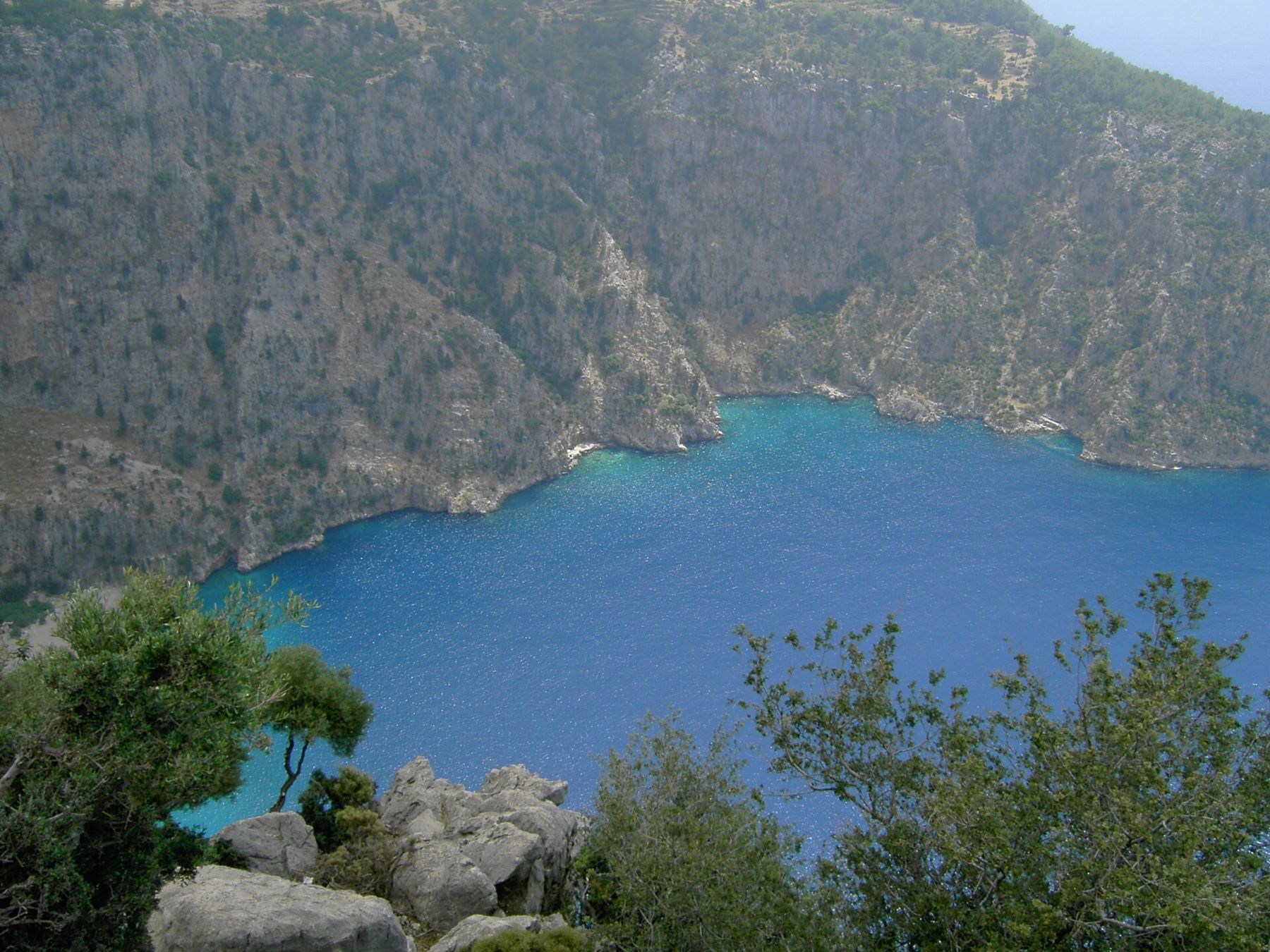
The Lycian Way is a waymarked long-distance trail that runs for about 500 kilometres, or a little more, from the Fethiye area along the coast and mountains of ancient Lycia towards Antalya. It is not a single ancient road. It stitches together mule tracks, shepherds' paths, forest roads, village lanes and, here and there, stretches of paved road that are centuries old. Waymarked around the turn of the millennium, it has become one of the best-known walking routes in Turkey.
For a guide to ancient stones, the trail matters because it passes so many of them. Walk it and you meet tombs in fields, city walls in the scrub, theatres above villages and cisterns that still hold water. You do not need to walk all of it to understand the region. Most people walk a section of a few days, and many walk a single day between two places they want to see.
What the route covers
The western end lies in the hills above Ölüdeniz near Fethiye. From there the trail climbs along cliffs high above the sea, past the villages above the Butterfly Valley, then turns inland and down towards the long sands of Patara. It continues past Kalkan and Kaş, through the indented coast around Üçağız and Kekova, to Demre and Finike, then crosses into the mountains and comes down to the coast again near Olympos and Çıralı before the final climb towards the Antalya end.
Along the way it passes or comes close to a remarkable list of ancient sites. The cliff villages of Faralya and Kabak, described in the stretch above the Butterfly Valley, are early highlights. Further east, the route touches Patara and runs near the Letoon and Xanthos, reaches the sunken stones of Kekova, passes close to Myra, and later leads to the ruins of Olympos and the Chimaera flames, then towards Phaselis. You can treat the trail as a slow road between these places.
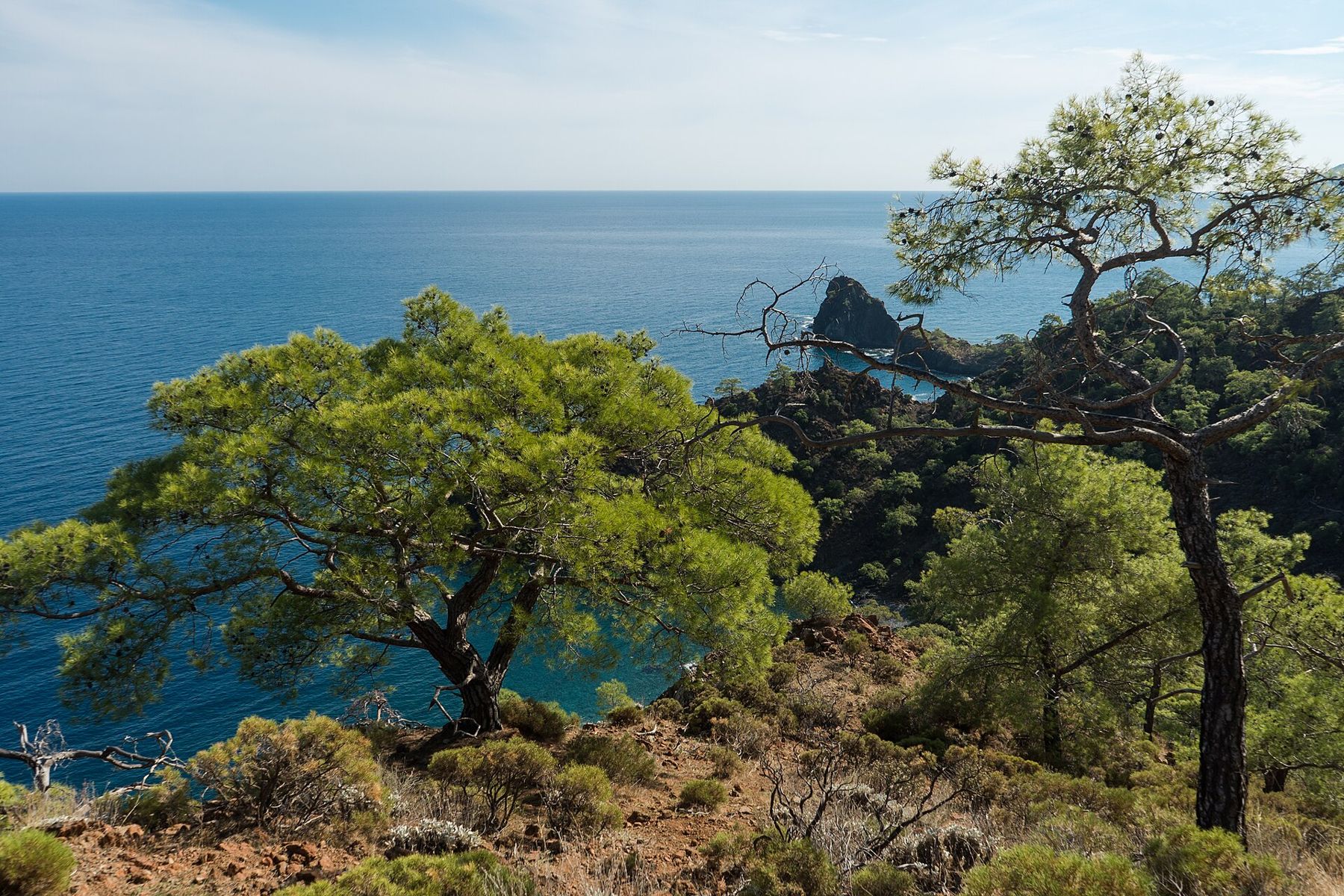
The trail is not one landscape. Coastal sections swing between headlands and coves; inland stretches cross high limestone country with juniper and cedar, empty pasture and very few people. Some parts climb a long way above the sea, and the highest sections can carry snow late into spring.
Waymarks and finding the way
The route is marked with red-and-white paint flashes, the same convention used on long trails in much of Europe: a pair of stripes painted on rocks, walls, trees and posts to show you are on the path. A change of direction is often shown by a bent stripe or an arrow, and a cross in the same colours marks a wrong turn. In places you also find wooden or metal signposts with distances or names.
The waymarks are maintained unevenly. Paint fades in the sun, scrub grows over paths, new dirt roads cut across old ones, and a construction site can wipe out a stretch overnight. Walkers sometimes find a well-marked day followed by an hour of searching. Carry a reliable map and a way of navigating that does not depend on a single phone battery, and turn back early if you lose the marks in rough ground.
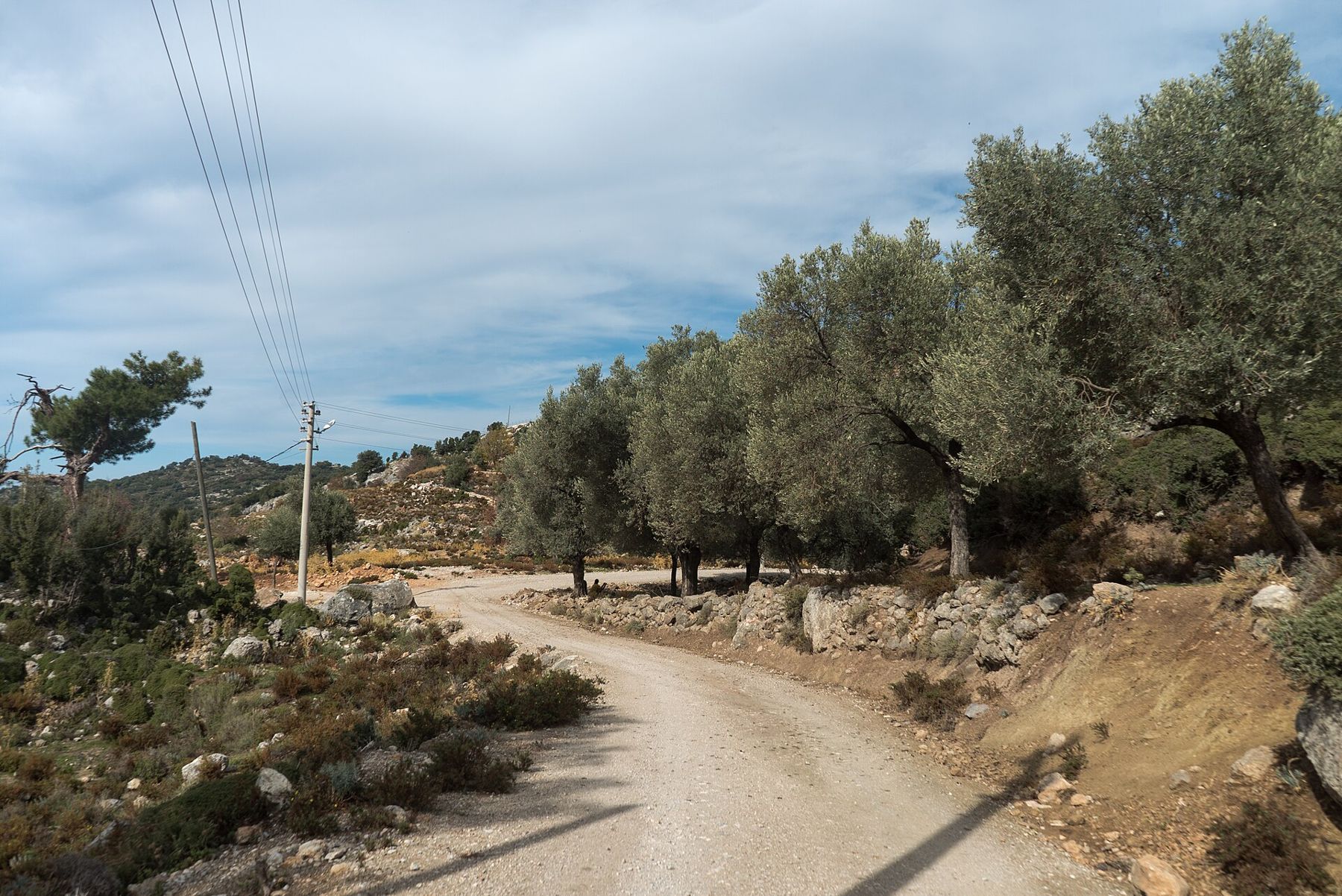
Expect variety underfoot. Some sections are easy tracks between olive groves; others are steep, broken limestone where every step needs care. The rock is sharp and unforgiving, and a twisted ankle on a remote section is a serious matter.
Water, heat and the seasons
Water is the first fact of the Lycian Way. Many stretches have no reliable source for hours. Old stone cisterns, some of them domed and very old, sit beside the path, and they may hold water, but it is often stagnant and should be treated before drinking, if you use it at all. Village fountains and springs are more dependable, yet some dry up in late summer. Plan each day around where you can refill, and carry more than seems necessary.
Water is the first fact of the Lycian Way.
Heat is the second fact. Summer on this coast is long and hot, and exposed limestone reflects the sun back at you. Midday walking from June to September is dangerous on open ground, and heat exhaustion comes on faster than walkers expect. If you walk in the warm months at all, start at first light, rest through the middle of the day and keep sections short.
- Spring, roughly March to May, brings flowers, running streams and comfortable temperatures, with showers and snow still possible on high ground.
- Autumn, roughly October and November, is often settled and warm, with long clear days for walking.
- Summer is for very early starts and short coastal sections only.
- Winter brings heavy rain on the coast and snow inland; some sections are possible on clear days, others are not.
Planning sections
Few people walk the whole trail in one go; it takes several weeks. Most choose a section that suits their time and fitness. Good first sections are those with frequent villages and road access, where you can shorten a day if the heat or terrain proves harder than expected. The coastal stretch between Kalkan and Kaş is one such choice. Remote mountain sections are better left until you know how the trail behaves.
Accommodation along the route ranges from village guesthouses to camping, and both depend on the season. Some villages offer very little outside the main walking months. Shops are sparse in the hills, so carry food for the day. Rules on camping, fires and access to protected areas change, as do bus routes linking trailheads; check current arrangements before you go, and respect fields, gates and water sources that belong to the villages you pass.
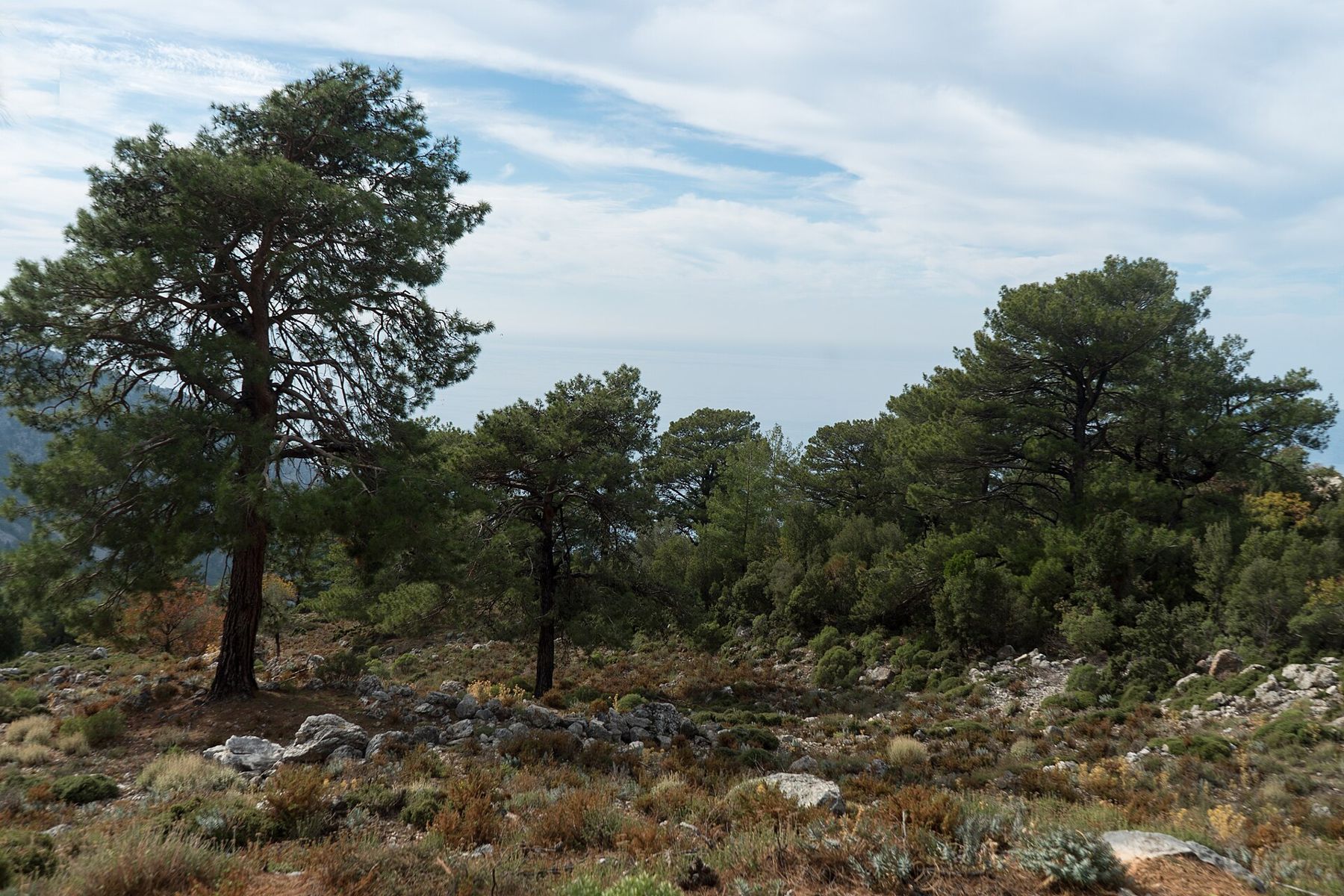
Walking past ancient stones
The real reward of the trail, for anyone interested in the past, is how ordinary the ancient world feels along it. A sarcophagus stands in a field beside a beehive; a stretch of polygonal wall runs under the path; a rock-cut tomb looks down on a goat pen. You see these stones as people of the region have always seen them, part of the land rather than exhibits.
Leave them as you find them. Do not climb on tombs or walls, do not move blocks to sit on, and do not take fragments of pottery or carved stone. Many of these remains are unprotected and fragile. If you want to understand what you are looking at, a short read on the main kinds of Lycian tomb before you set out will make every day on the path richer.
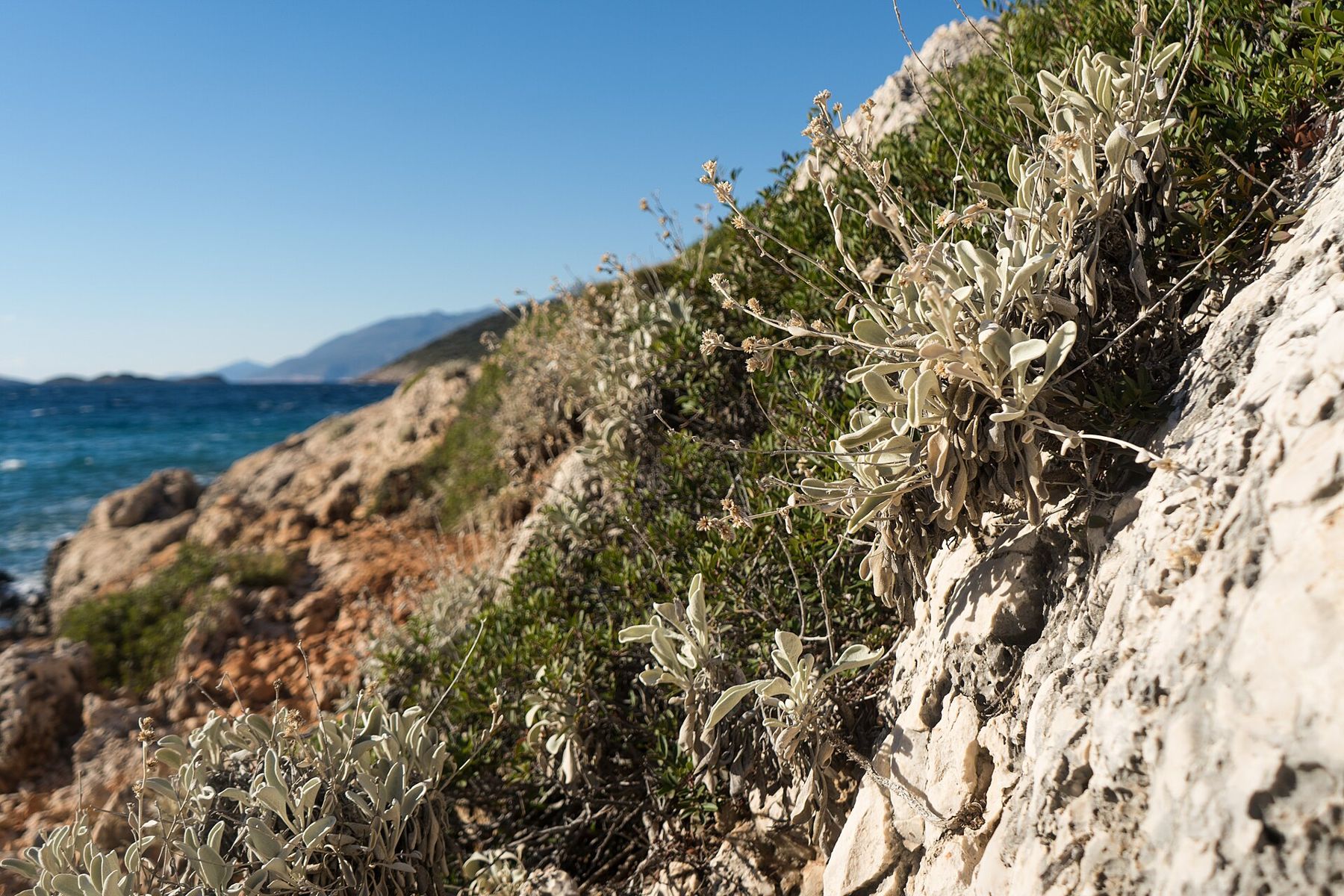
Walk slowly, carry water, start early and give yourself time at the places that hold you. The Lycian Way is best understood not as a challenge to be finished but as a long, rough path through a landscape that people have walked for thousands of years.