 LYCIAN STONES
Most of the ancient sites around Antalya stand as empty shells, stripped of the statues, inscriptions and sarcophagi that once filled them. Many of those objects are in the Antalya Museum, west of the old city. A visit there and a walk through Kaleiçi, the walled old town around the harbour, make a day that ties the region's history together without leaving the city.
The Antalya Museum
The museum holds finds from across the Antalya region, from prehistoric caves to the Ottoman period. Its strongest rooms are those devoted to the Roman period, and many of the finest pieces come from Perge.
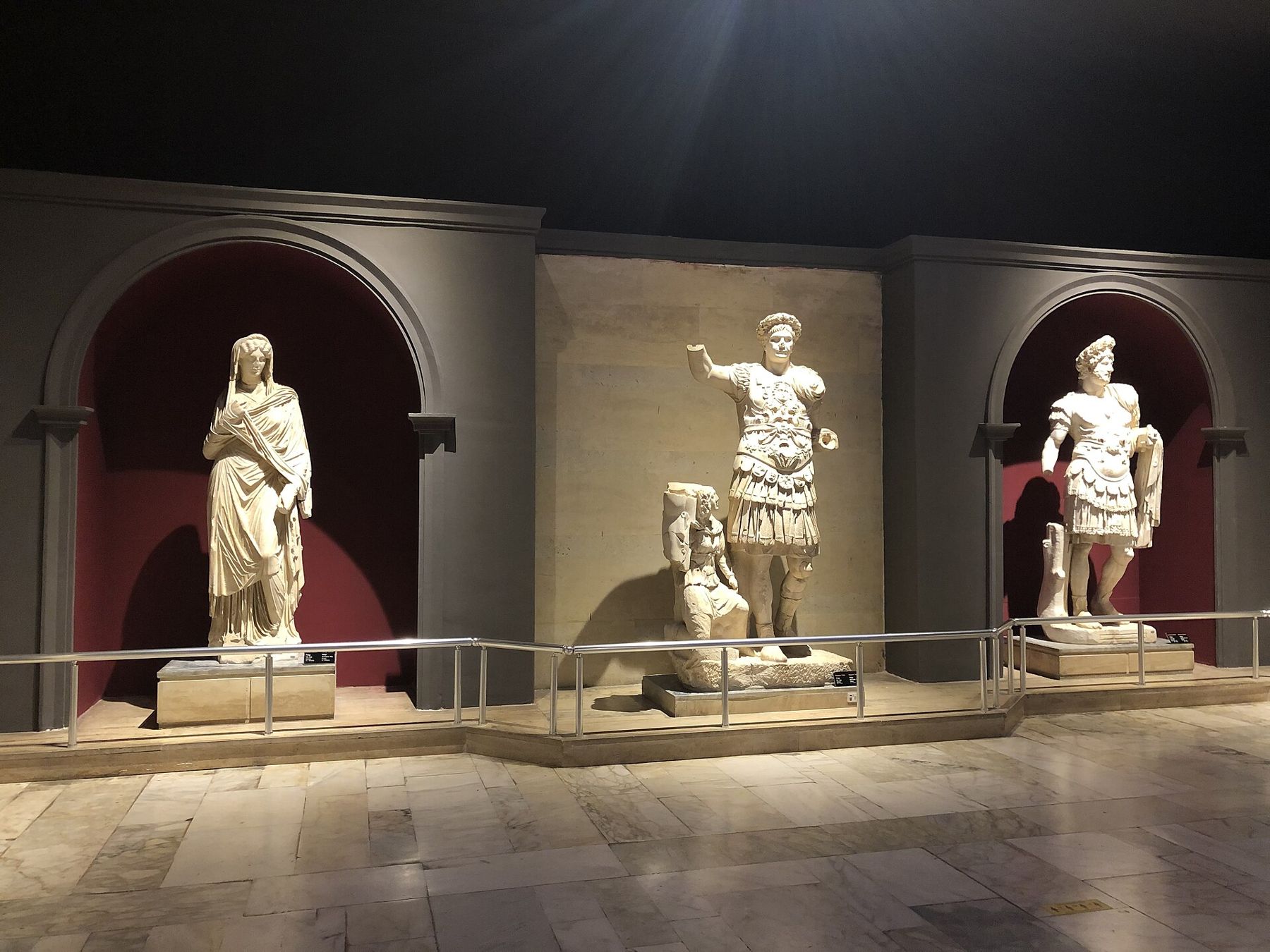
The galleries of statues are the centre of the visit. Gods and goddesses, emperors and members of their families, and local benefactors stand in rows, many of them almost complete. Several come from the gate court and the theatre at Perge, where you can still see the niches they once stood in.
One statue has a famous history. The so-called Weary Herakles, showing the hero resting after his labours, was found at Perge in two parts. The upper half left Turkey and spent decades abroad before it was returned and reunited with the lower half in the museum in the 2010s.
Sarcophagi and mosaics
The sarcophagus hall holds some of the best carved marble coffins found in the region. Many come from the necropolis of Perge and date from the Roman imperial period. Their sides are covered with reliefs: scenes from myth, especially the labours of Herakles, garlands, and figures under columned arches.
Look closely at the lids, some of which carry reclining figures of the dead, shown as if resting at a banquet. The quality of the carving shows the wealth of Pamphylian families in the Roman period.
Do not skip the earlier rooms on the way in. Finds from Karain Cave, north of Antalya, take the story of the region back into the Palaeolithic, with stone tools and bones from people who sheltered there many thousands of years before any city stood on the coast. Later rooms carry you through the Bronze Age, the small kingdoms of the Iron Age and the Greek cities, so that by the time you reach the Roman statues you have a sense of how much came before them. Byzantine finds, including icons and church furnishings, and Ottoman objects close the sequence. Labels are in Turkish and English, and the building is laid out so that you can follow the periods in order.
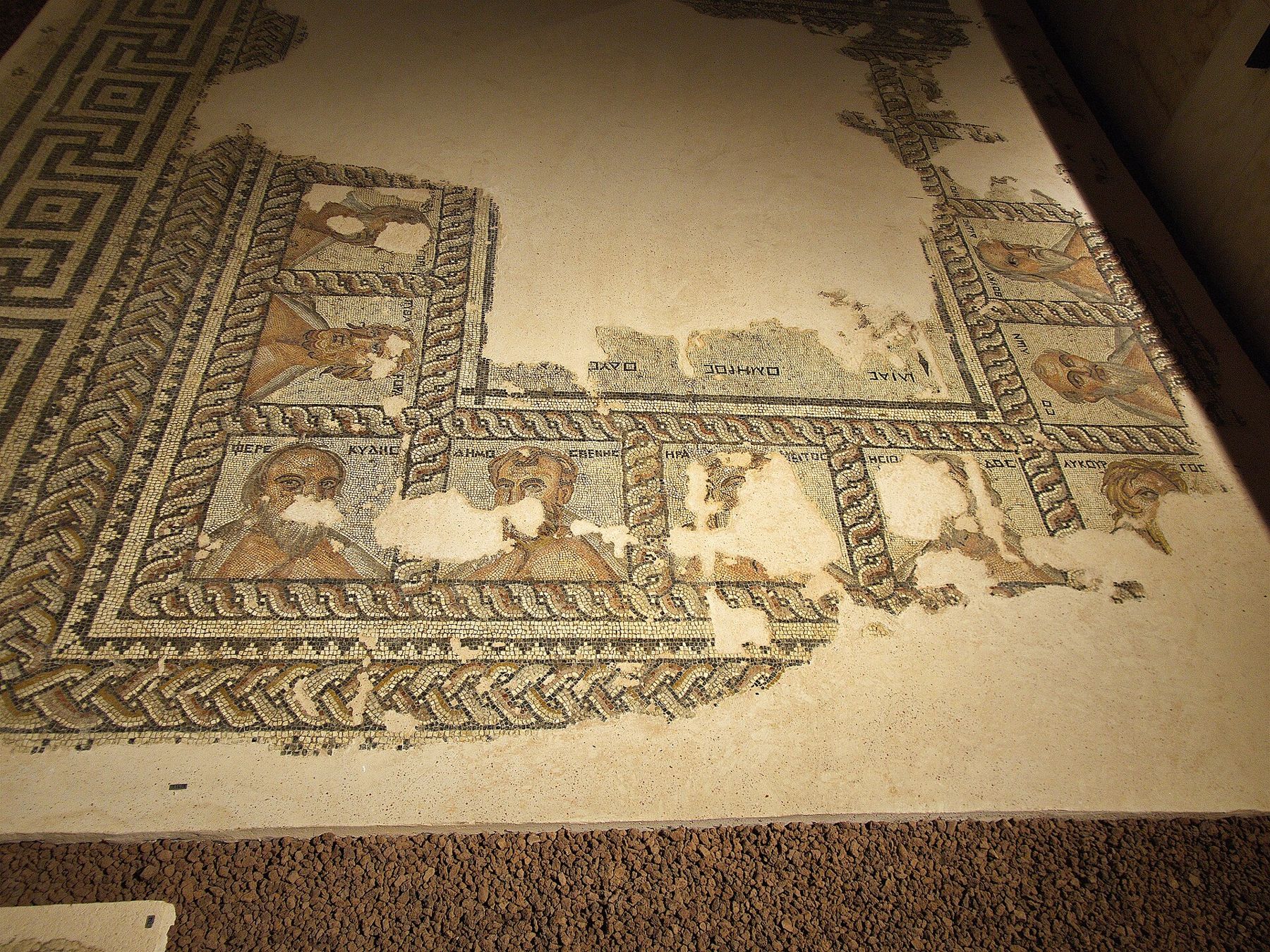
The museum also displays floor mosaics, inscriptions, coins and smaller finds. Opening hours and fees change; check before you go. Allow at least two hours.
Getting from the museum to Kaleiçi
The museum lies on the main road west of the centre. A tram runs along the coast road between the museum area and the old city, and walking is also possible along the clifftop. Times and routes change; check locally.
Hadrian's Gate
The main entrance to the old city from the east is Hadrian's Gate, a triple-arched marble gateway built in the second century AD to mark the emperor Hadrian's visit to the city. It is one of the most complete Roman monuments in Antalya.
The gate stands between two towers, one of which is of a later date, and its arches are decorated with carved coffers and rosettes. The marble facing is finely worked, and the gate kept its shape through centuries because it was built into the city walls.
Stand inside the arches and look down at the stone paving, which still carries ruts from cart wheels. The road level outside is now higher, so you look down onto the ancient surface.
Kaleiçi and the harbour walls
Kaleiçi, the old town, lies within the line of the old walls, sloping down to the small harbour. Its lanes are lined with Ottoman houses, many restored, with wooden upper floors and projecting bays.
Several older monuments stand among them. The fluted minaret known as Yivli Minare, from the Seljuk period of the thirteenth century, is a landmark of the city. The Kesik Minare, the broken minaret, stands on the site of a building that was a Roman temple, a Byzantine church and later a mosque.
At the south-western edge of Kaleiçi, the round Hıdırlık Tower rises above the cliff, usually dated to the Roman period, though its original purpose is not certain. From there you can look over the sea towards the mountains of Lycia.
The harbour itself has been used since antiquity. The walls around it have been rebuilt many times, but they follow the line of the ancient fortifications. Walking down to the water and back up through the lanes gives a sense of how the city grew around its harbour.
Seeing the city in a day
- Visit the museum in the morning, before the city heats up.
- Take the tram or walk to Kaleiçi, entering through Hadrian's Gate.
- Walk down to the harbour, then up to the Hıdırlık Tower in the late afternoon.
The museum makes more sense if you have seen the sites, and the sites more sense once you have seen the museum. Perge, Aspendos and Side are all within reach for a day trip, and the mountain city of Termessos is closer still.
When you finish at the harbour, turn and look back up at the walls and the minarets. Roman, Byzantine, Seljuk and Ottoman Antalya are all there in one view.