 LYCIAN STONES
Side is an ancient city that never quite emptied. A small peninsula on the coast east of Antalya carries Roman walls, temples, a theatre, baths and streets, and around and over them stands a modern resort town of shops and holiday houses. It is not a site you visit behind a gate so much as one you walk through. That makes it easy, but also asks something of you: to look past the present to the stone underneath.
The name is thought to come from an old Anatolian word for pomegranate, and the fruit appears on the city's coins. Side was a busy harbour in the Hellenistic and Roman periods, and ancient writers associated it with the trade in captives taken by pirates. Its best surviving buildings date from the Roman centuries, especially the second century AD.
Arriving through the gates
You approach the old town from the land side, past the remains of the Hellenistic city wall and a monumental fountain, a nymphaeum, outside the main gate. Beyond the gate a colonnaded street runs towards the centre. Parts of the old town are closed to ordinary traffic, and there is often a shuttle or a walk from parking areas outside the walls; arrangements change, so check on arrival.
Along the route you pass a monument associated with the emperor Vespasian, then reach the area of the theatre, the agora and the museum. Walking the length of the peninsula, from the gate to the temples at its tip, takes perhaps twenty minutes without stopping.
The theatre on its arches
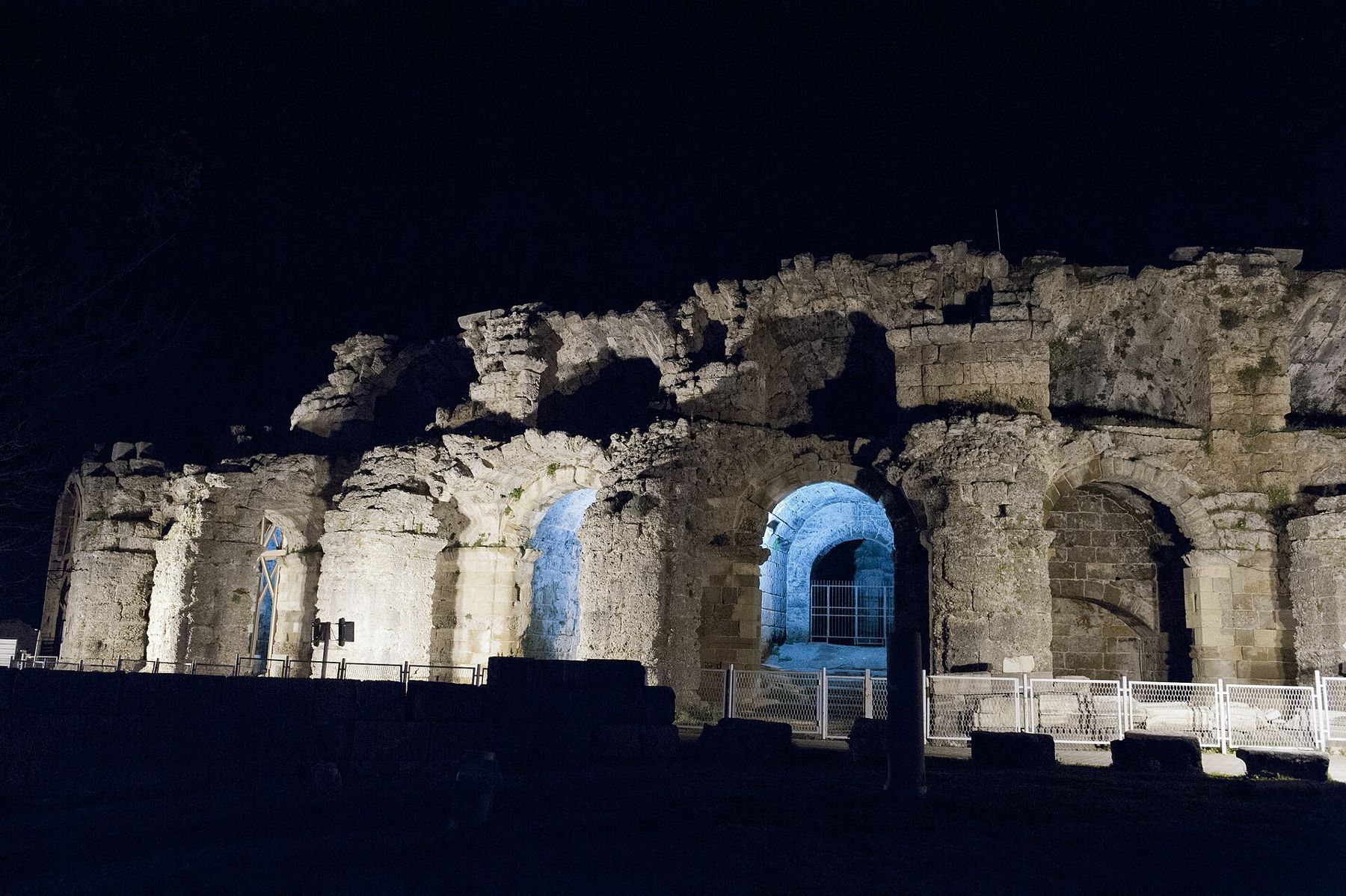
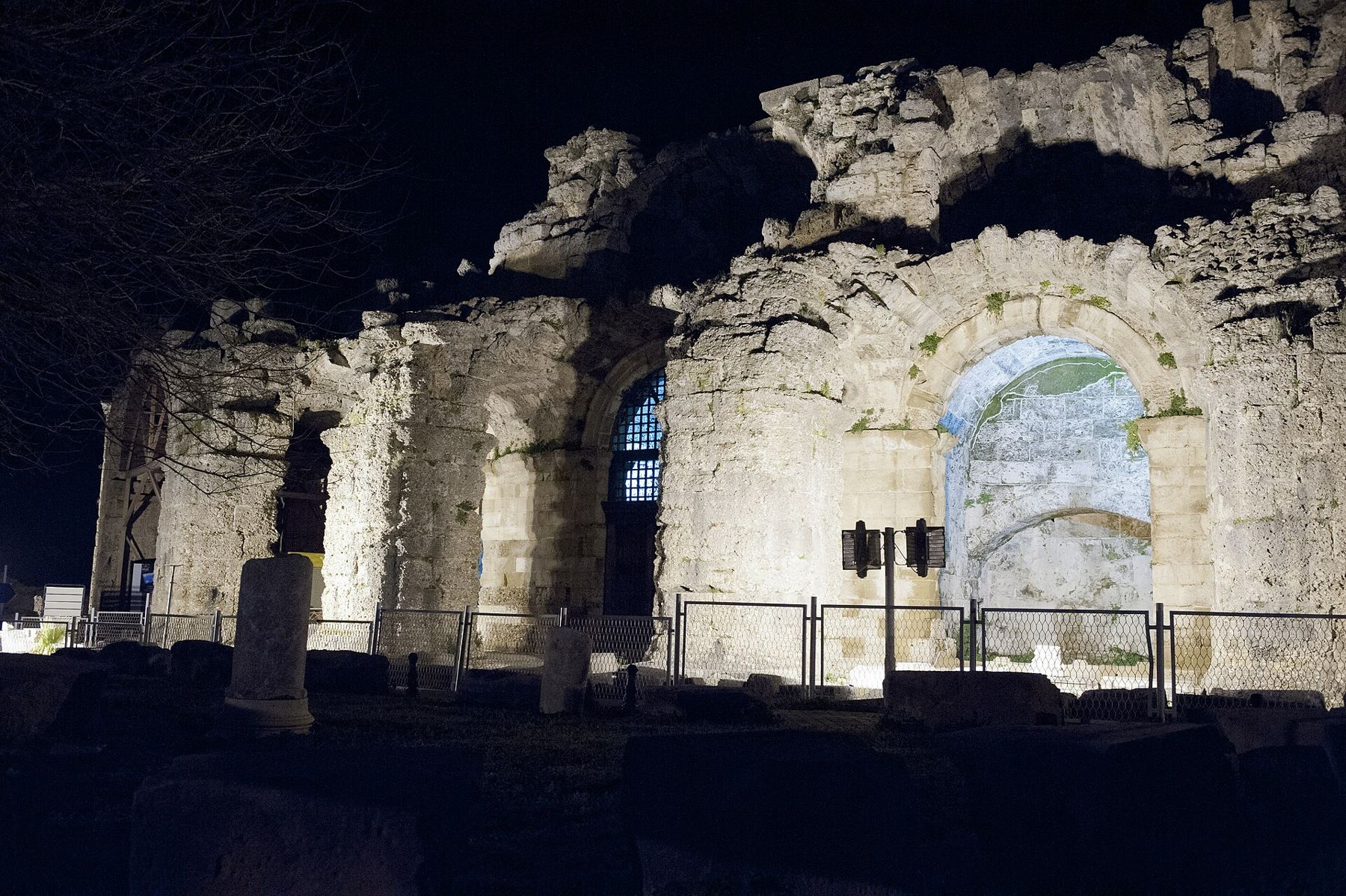
Side's theatre is its largest monument, and it is built differently from most theatres on this coast. There was no convenient hillside, so the seating was raised on a structure of vaulted galleries and arches. From outside, it looks less like a theatre than a great curved wall.
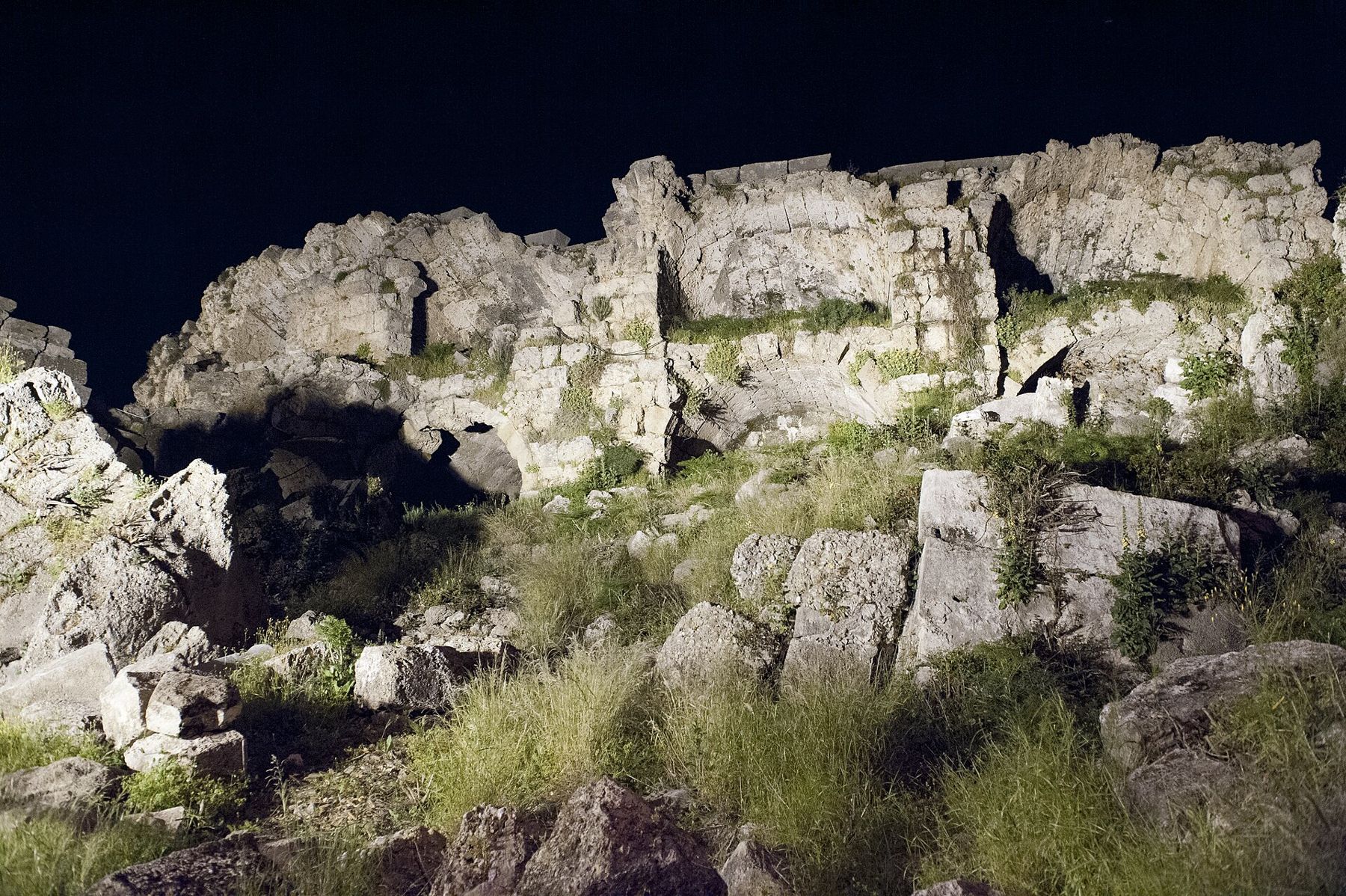
The theatre dates mainly from the Roman imperial period, and in late antiquity part of it seems to have been used for other purposes, including religious ones. Walk around the outer wall to see the arches and stairways, then go in, if it is open, to look at the scale of the seating and the fragments of the stage building. Opening times and access vary; check before you go.
The theatre is lit at night, and seeing its outer arcades after dark gives a strong sense of mass. In the day, the heat on the open seating can be intense.
The museum in the baths
Facing the theatre and agora, the Side Museum occupies a restored Roman bath building. The setting is part of the visit: you move through the bath halls with their thick walls and vaults, and the sculpture, sarcophagi and inscriptions from the city are displayed inside them and in the garden.
The collection is smaller than the Antalya Museum, but it is all local, and seeing statues in a Roman building in the city where they were found has its own interest. Opening times and fees change; check before you go.
The temples by the harbour
At the end of the peninsula, beside the old harbour, stand the remains of two temples usually identified as the temples of Apollo and Athena. They date from the second century AD. Several columns of the Apollo temple have been re-erected with a section of carved entablature, and they are the image most people take home from Side.
The temple platform stands right by the water, with the sea on two sides. Late in the day the columns catch the low sun, and that is when most visitors gather. Come early in the morning for a quieter look at the carved frieze, which carries a band of Medusa heads.
Near the temples, the remains of a Byzantine basilica and other later buildings show that this end of the city went on being used long after the temples' cult had ended.
The modern town and the ancient one
The modern streets follow the old lines in places, and you will find column bases, inscribed blocks and ancient walls built into or standing beside modern buildings. The colonnaded street, the agora with its round structure, and the walls can all be traced if you walk slowly and look down as well as ahead.
The modern town has grown along the old shore, and the sea sets the scene at almost every turn: the harbour that made the city rich is still there, though small boats now replace the merchant ships of antiquity.
Side is busy in high summer, and the shopping streets can feel crowded. Spring and autumn are better for walking, and the ruins are easier to read without the crush.
Combining Side with other sites
Side is the farthest of the main Pamphylian sites from Antalya, and many visitors combine it with Aspendos, which lies on the way. With a long day you can see both, plus the colonnaded street of Perge, though that is a lot of stone and heat for one day. Splitting them over two days lets you see each one in the better morning or evening light.
- Start early or late; midday in summer is hot on the open ground.
- Carry water and wear a hat.
- Bring a torch if you plan to walk around the lit ruins after dark.
When you leave, look back from the land walls towards the peninsula. The temples at the tip, the bulk of the theatre in the middle and the town around them make one picture: a Roman harbour city that has been lived in, in one way or another, ever since.