 LYCIAN STONES
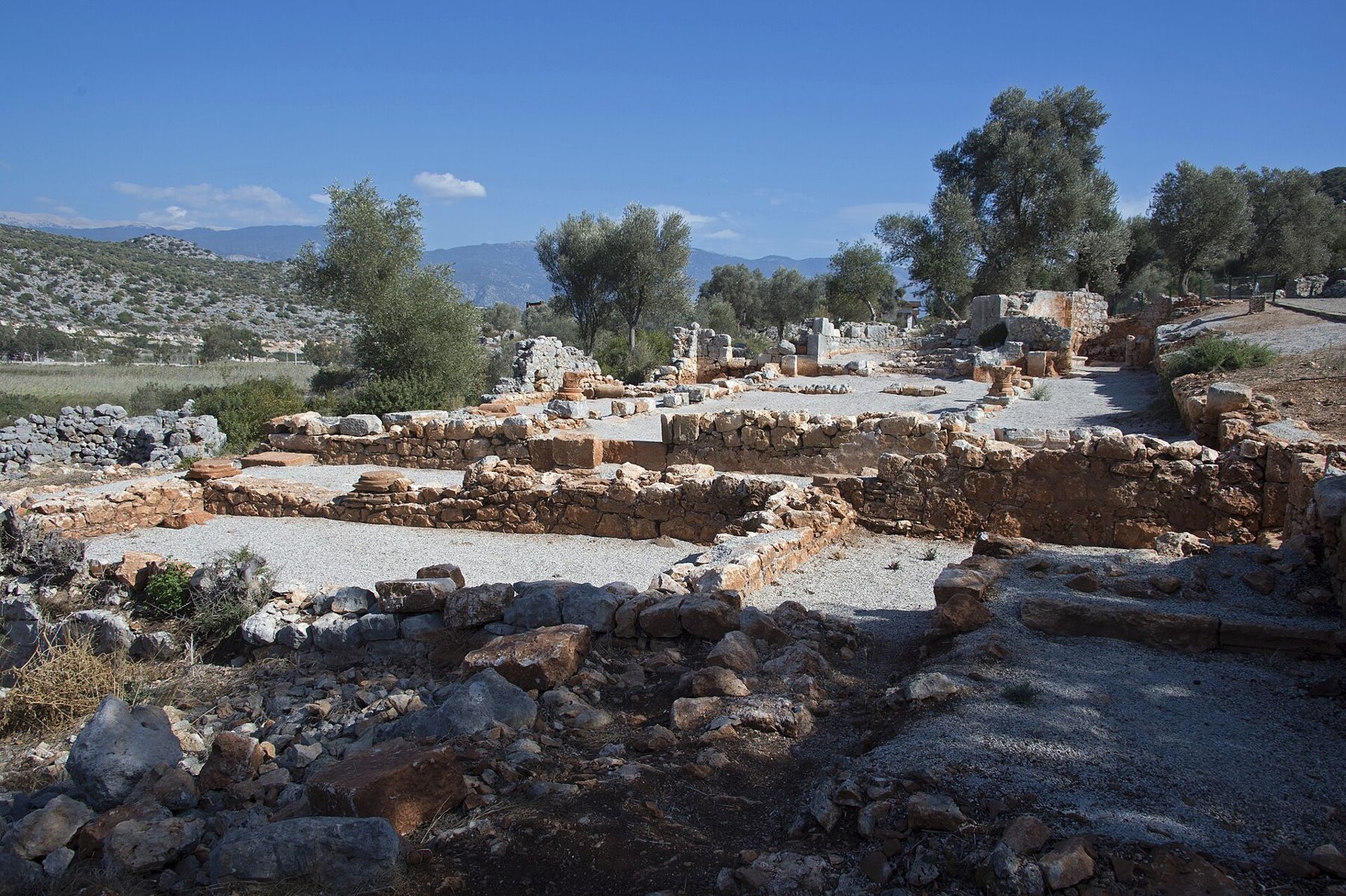
Myra is three places that belong to one story. The ancient city lies on the northern edge of modern Demre, where a limestone cliff is cut with rows of tombs and a Roman theatre opens beneath them. In the middle of the town stands the church of Saint Nicholas, the bishop of Myra, whose later legend travelled further than almost anything else from Lycia. And a few kilometres to the southwest, at the mouth of the river, lies Andriake, the city's harbour, where grain ships once loaded and where excavation has opened warehouses, a market square and churches.
You can see all three in a day, and the order matters less than the heat. Start early at the cliff, go to the church when the sun is high, and leave Andriake for the late afternoon.
The cliff of houses
The first thing you notice at Myra is the cliff. Its face is cut with dozens of tombs, many of them in the form that Lycia made its own: the front of a house carved in stone. Beams project as round log ends, the doorways are divided into panels, and the roofs are flat, with the ends of rafters showing under the eaves. These are copies in rock of the timber houses Lycians lived in, made so that the dead had a permanent house of their own. A few tombs carry reliefs of figures; some carry inscriptions in the Lycian script.
There are two main groups. The tombs above the theatre, facing the sea, are the ones everybody photographs; a second group lies around the cliff to the east, above the river valley, and is often quieter. Most of the tombs date from the fifth and fourth centuries BC, when Myra was already one of the leading Lycian cities. Later Myra was one of the six cities with the largest voice in the Lycian League, which met at Patara.
You see the tombs best from below. The paths and railings change as conservation work goes on, and the upper tombs are not usually open to climbing; check what is accessible when you arrive. For the shapes and what they copy, read how to read a Lycian tomb before you go.
The theatre beneath the tombs
The theatre is Roman, built into the hillside where an older Greek theatre is thought to have stood. Much of what stands was rebuilt after a severe earthquake in the second century AD. The seating curve is large and well kept, with a diazoma, the walkway that divides the lower rows from the upper ones, and vaulted passages beneath the upper seats that you can walk through. The stage building has mostly collapsed, and its pieces lie in rows in front of the seats.
That rubble is where the theatre's best carving is. Look among the blocks for the masks: comic and tragic faces cut in relief, some with curled hair and wide mouths, decorating what was once the front of the stage. Stand on the upper rows afterwards and you can see the tombs above you and the plain below, now covered in greenhouses, running to the sea.
Start early at the cliff, go to the church when the sun is high, and leave Andriake for the late afternoon.
The church of Saint Nicholas
Nicholas was bishop of Myra in the fourth century. Very little about his life is securely known; the stories of secret gifts and rescued children grew over the centuries that followed, and from them, in time, came the figure of Santa Claus. What is secure is that Myra was a bishop's seat, that his cult grew strong here, and that a church over the place associated with his burial became a pilgrimage site.
The church in the centre of Demre is the result of many rebuildings. Much of the standing structure is Byzantine, rebuilt more than once in the centuries after the first church, and it was restored again in the nineteenth century with Russian support, when parts of the roof were renewed. Because the river has laid down silt over the centuries, the church now lies well below the level of the modern street, and you walk down into it.
Inside, look at the floor: parts of the old opus sectile paving survive, patterns of cut marble in circles and squares. There are traces of wall paintings in the side rooms and the synthronon, the stepped bench for the clergy, curving around the apse. A carved sarcophagus in a side aisle is traditionally pointed out as the saint's tomb, though that tradition is not provable. In 1087 sailors from Bari carried relics of Nicholas away to Italy, where they are still venerated.
The church is a museum with a ticket, and it is busy in season, often with large groups arriving together. Early in the day or near closing time it is calmer. Dress modestly, as you would in any church. Opening hours and fees change; check before you go.
Andriake, the harbour of Myra
Myra stood a little inland, and its harbour was Andriake, at the river mouth near the village of Çayağzı. The harbour was important enough that Saint Paul's journey to Rome, as told in the Acts of the Apostles, changed ships at Myra. Most of what you see at Andriake is Roman and Byzantine, and excavation over recent decades has opened a whole working harbour district.
The largest building is the granary, a long row of storerooms built under the emperor Hadrian in the second century AD, which stored grain on its way across the Mediterranean. It now houses the Museum of Lycian Civilizations, which is worth an hour for its finds from the region. Around the harbour you also find the remains of churches, baths and workshops where purple dye was made from murex shells.
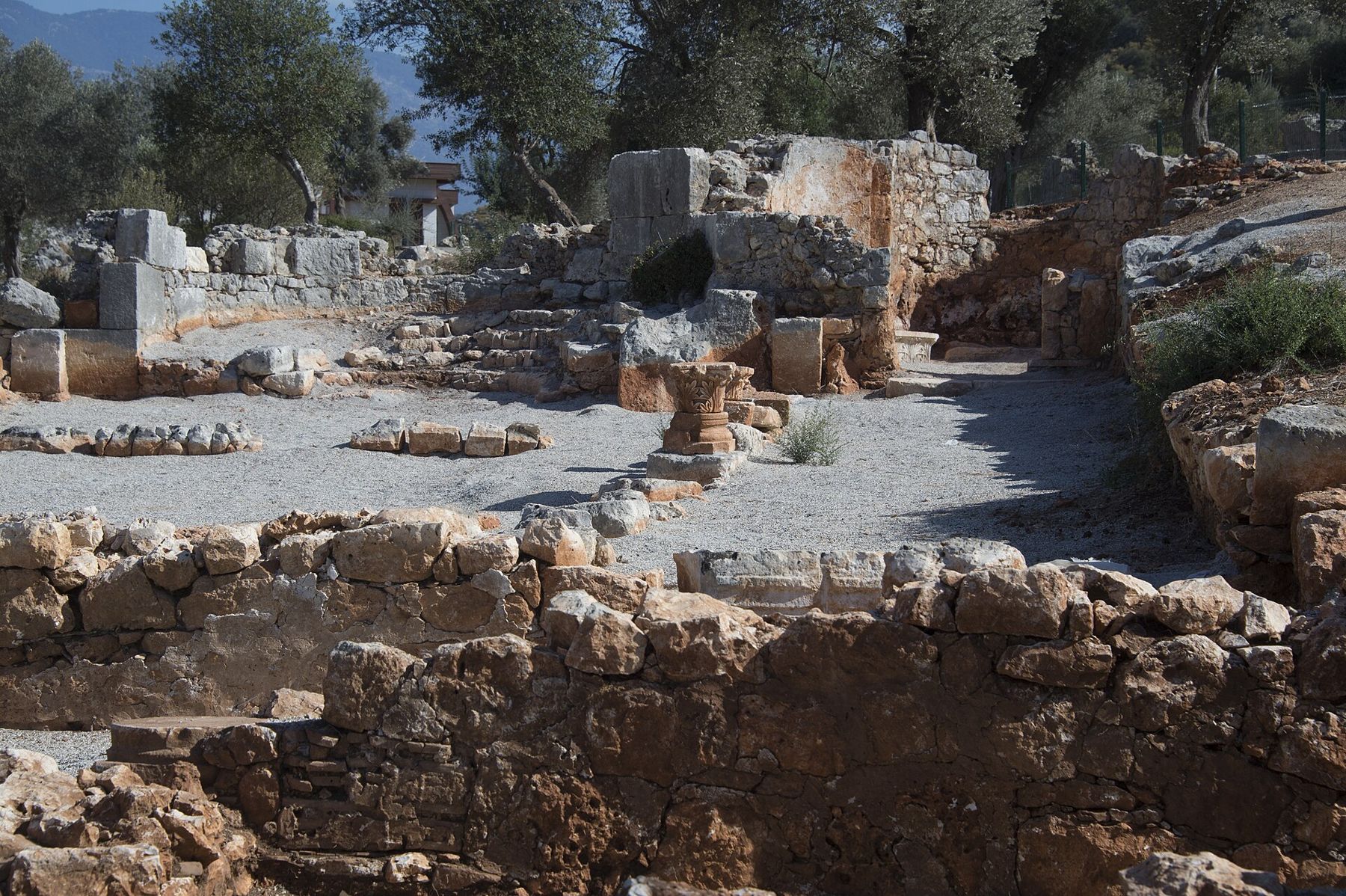
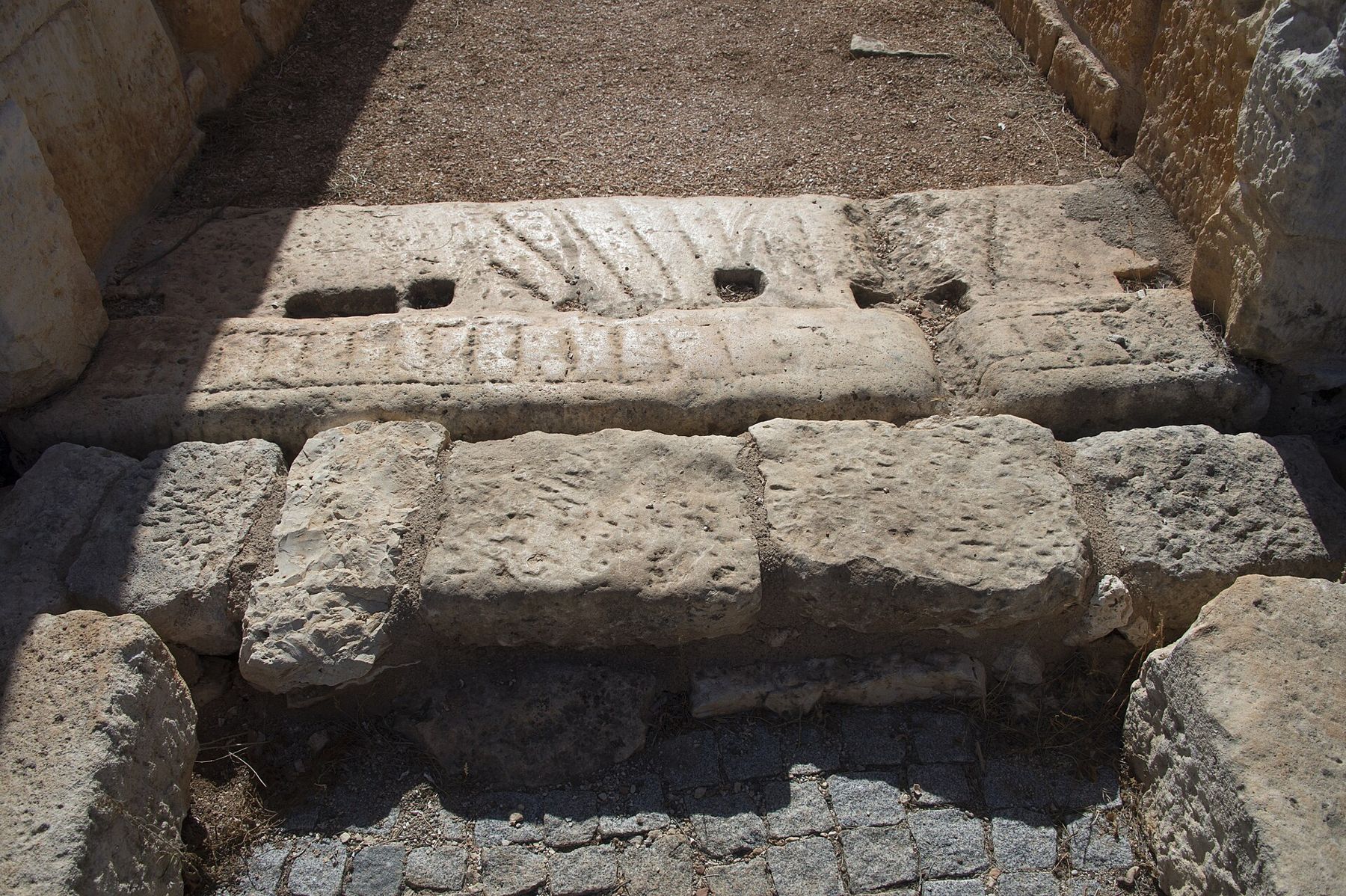
Near the granary stands the agora, a square courtyard surrounded by rooms that were probably shops, partly rebuilt using old stone. Check the thresholds as you enter: the doorways still show the slots and sockets where wooden doors were fixed, and the stone is worn into grooves by centuries of use.
Under the agora: the cistern
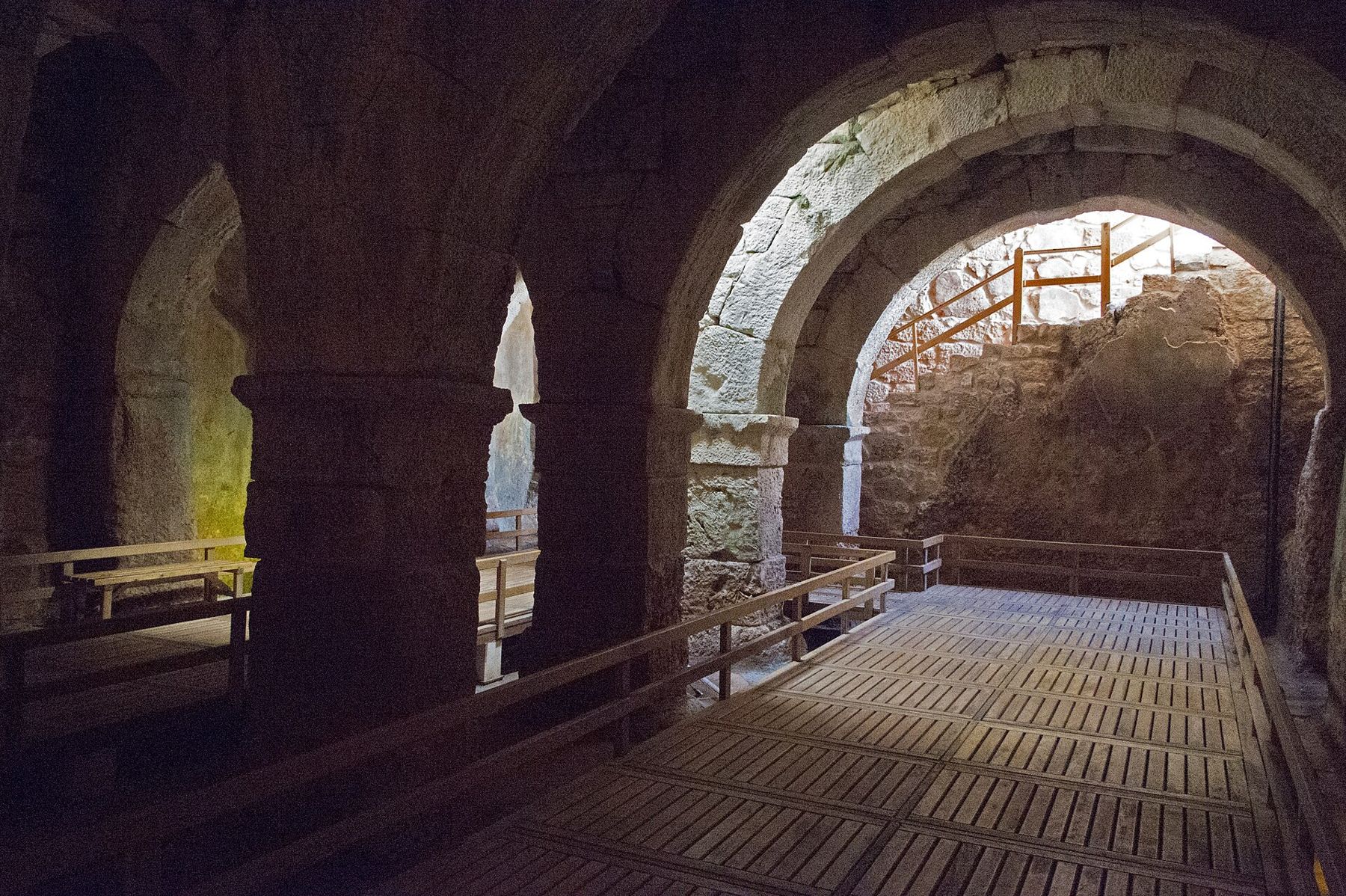
The best moment at Andriake is underground. Beneath the courtyard of the agora lies a large cistern, a water tank roofed with a series of stone arches, built to store fresh water for a harbour that had little of it. A stair takes you down, and a timber walkway runs between the arches. It is cool even in summer, and the stonework is very fine: carefully cut blocks, the arches springing from square piers, and the grey-green stain of the old waterline on the walls.
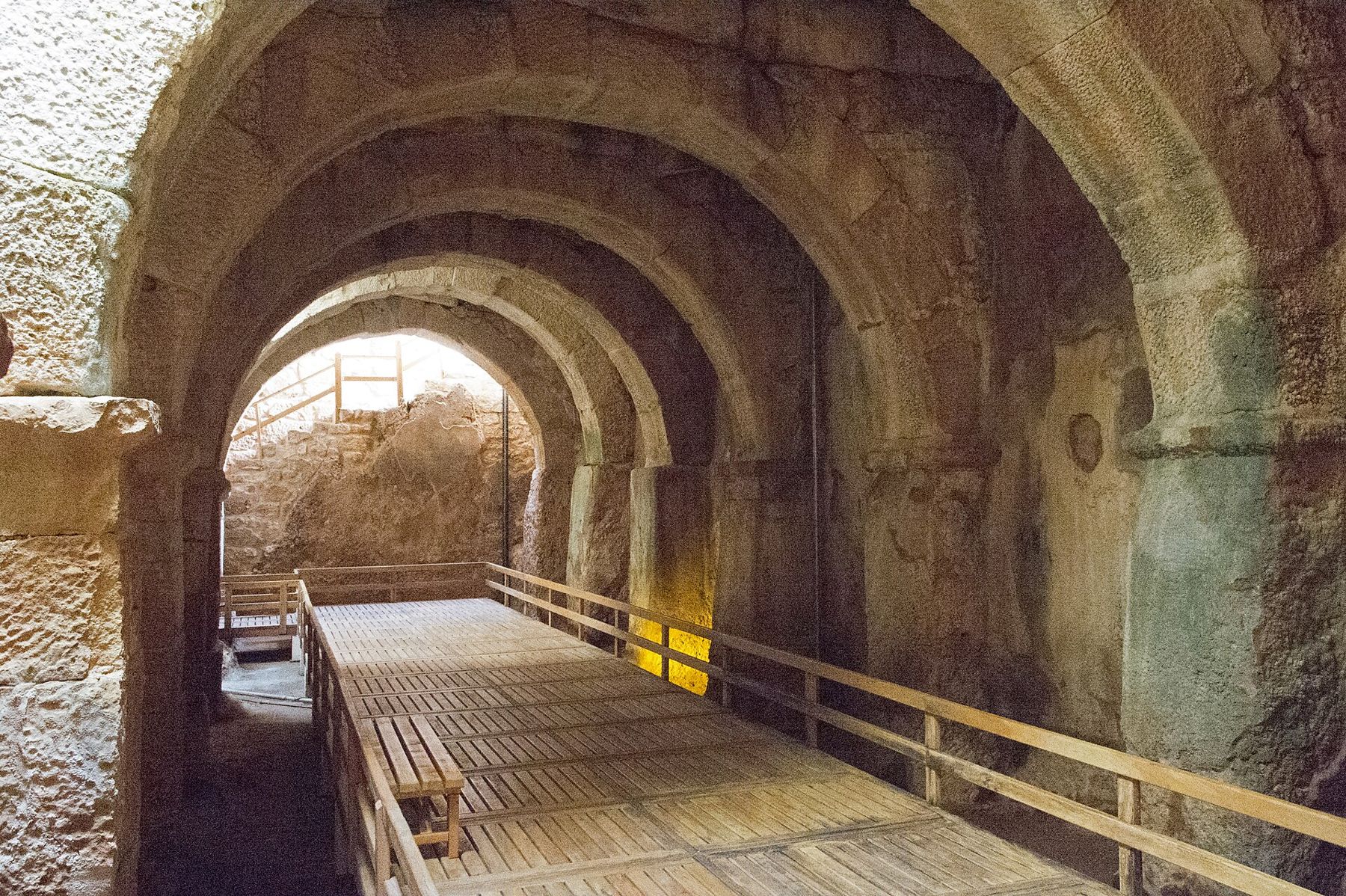
Take your time on the walkway and look at the way the arches are spaced and the vault is carried across. The cistern is a reminder that a harbour town on a dry coast depended on water management as much as on ships.
Planning the day
Demre lies on the coast road east of Kaş, and there are buses along the coast between the towns. Myra's ruins are on the north edge of town; the church is in the centre; Andriake is a few kilometres southwest, by the sea. Each site has its own ticket arrangement, which changes; check before you go. In summer the cliff and theatre are fully exposed, and midday heat there is dangerous, so carry water and keep the hottest hours for the church and the museum.
- Spring and autumn are the best seasons: mild days, clearer light on the cliff, fewer crowds.
- Allow about an hour for the theatre and tombs, an hour for the church, and two for Andriake and its museum.
- Boats leave from Andriake and the nearby coast for the sunken stones of Kekova, so the two places fit together in one stay.
If you are walking, parts of the Lycian Way pass through the hills around Demre, and the cliff of Myra makes a fine reason to break a section here.