 LYCIAN STONES
Lycia · Pamphylia · the Lycian Way
Lycian Stones
Tombs cut into cliffs, theatres facing the sea, and the long trail that ties them together. A register of the ancient sites around Antalya, one stone at a time, with what each one is like on the ground.
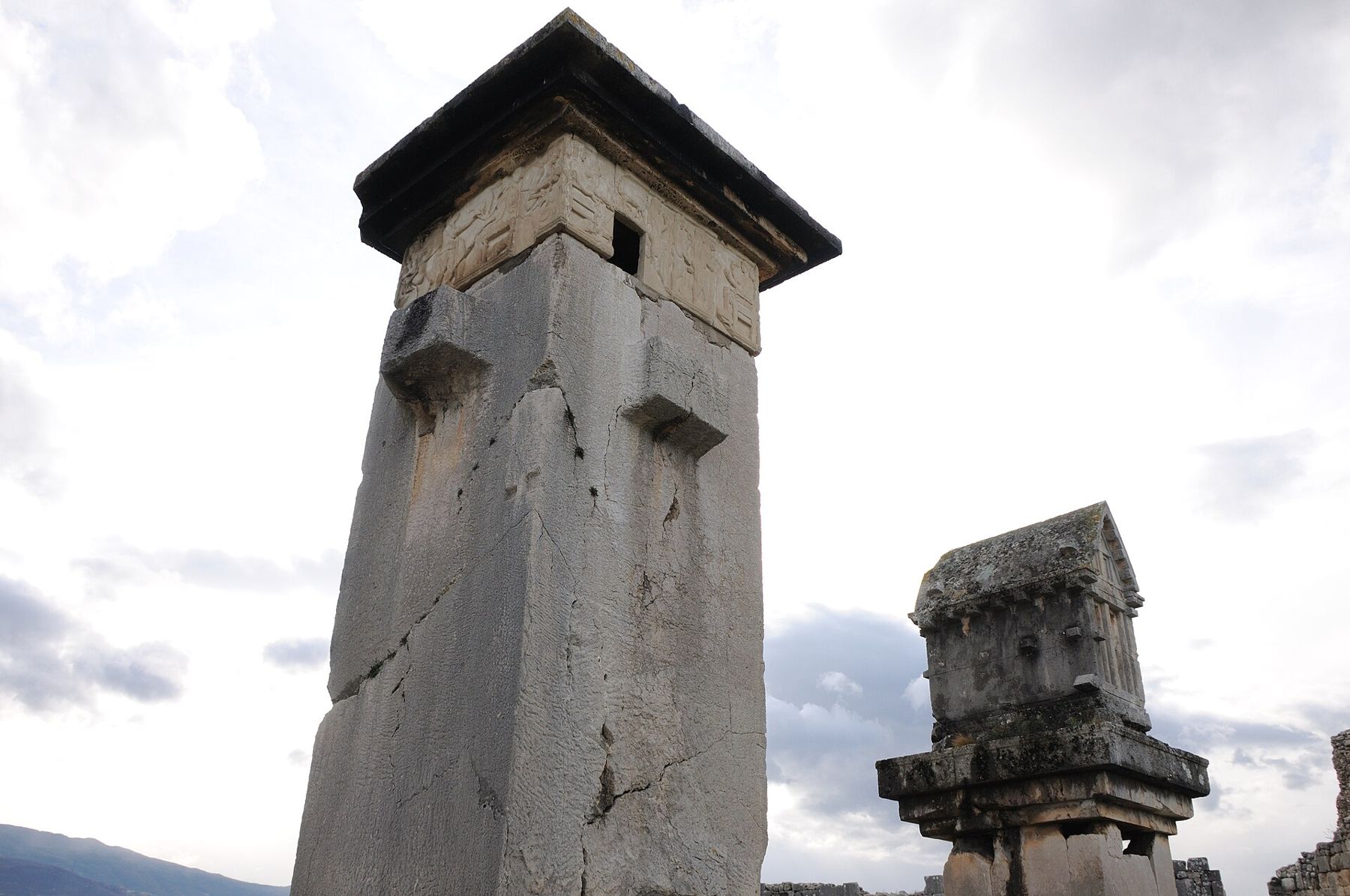
Lycia was a land of small cities with their own language and their own way of burying the dead: in houses cut into cliffs, on pillars, under stone lids shaped like boat hulls. Pamphylia, on the plain east of Antalya, was richer and more Greek, and Rome left its biggest marks there. Read the register below from east to west and the change shows in the stone.
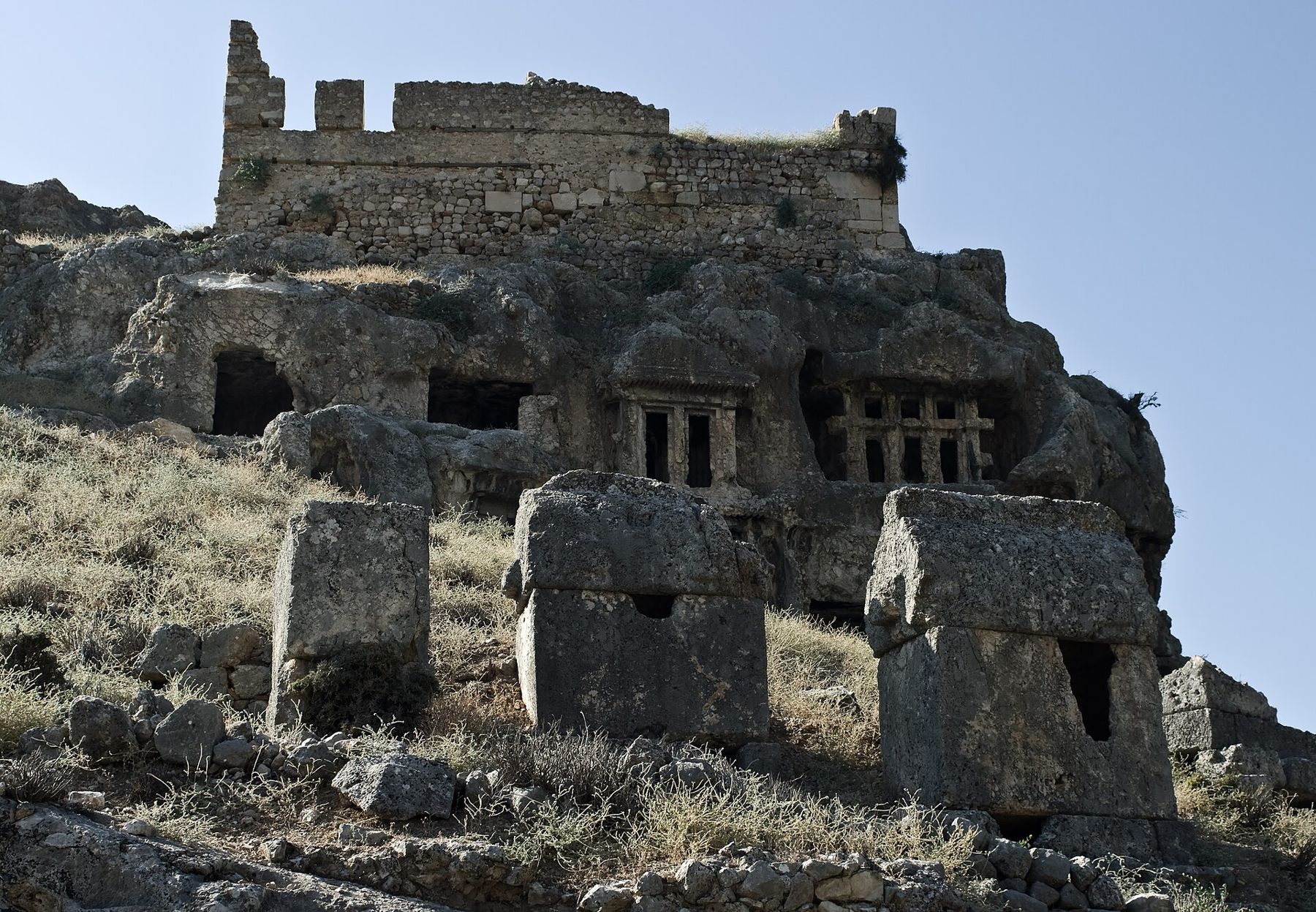
How to read a Lycian tomb
Pillars on hilltops, rock faces carved like timber houses, temple fronts in cliffs and stone chests with pointed lids: Lycian tombs follow a few clear types, and once you know them every site makes more sense.
The register
Every stone in this guide, numbered in the order you would meet them going west from Antalya.
| No. | Stone | Region | Period | On the ground |
|---|---|---|---|---|
| 01 | PergePerge, the colonnaded city | Pamphylia | Roman | Flat, wide, almost no shade |
| 02 | AspendosThe theatre at Aspendos | Pamphylia | Roman | Theatre easy; acropolis short, rough climb |
| 03 | SideSide's temples by the harbour | Pamphylia | Roman | Flat town walking, crowds at midday |
| 04 | TermessosTermessos, the city on the mountain | Pamphylia | Many periods | Steep climb, rough stone, some shade |
| 05 | AntalyaAntalya Museum and Hadrian's Gate | Pamphylia | Many periods | Indoor galleries, then old-town lanes |
| 06 | XanthosXanthos and the Letoon | Western Lycia | Lycian to Roman | Uneven hillside paths, patchy shade |
| 07 | PataraPatara, the league's meeting hall | Western Lycia | Roman | Flat sandy paths, little shade |
| 08 | Tlos and PinaraTlos and Pinara, the cliff cities | Western Lycia | Lycian to Roman | Rough paths, short steep climbs |
| 09 | Myra and AndriakeMyra's rock tombs and Saint Nicholas | Eastern Lycia | Many periods | Short walks, little shade, three separate stops |
| 10 | KekovaThe sunken stones of Kekova | Eastern Lycia | Many periods | Boat, then steep stepped path to castle |
| 11 | OlymposOlympos and the Chimaera flames | Eastern Lycia | Many periods | Shady valley paths; steep stepped climb |
| 12 | PhaselisPhaselis between three harbours | Eastern Lycia | Roman | Flat forest paths, about two hours |
| 13 | ArykandaArykanda on its terraces | Eastern Lycia | Roman | Steep terraces, uneven steps, some shade |
| 14 | Lycian WayWalking the Lycian Way | The Lycian Way | Many periods | Rocky paths, long climbs, sparse water |
| 15 | FaralyaThe Lycian Way above the Butterfly Valley cliffs | The Lycian Way | Many periods | Rocky mule paths, long climbs, cliff edges |
| 16 | KaşBetween Kalkan and Kaş on foot | The Lycian Way | Lycian to Roman | Stony paths, steep sections, little shade |
| 17 | LyciaHow to read a Lycian tomb | Reading the stones | Lycian | Cliff faces, scree slopes, roadside sarcophagi |
| 18 | LyciaThe Lycian alphabet and bilingual stones | Reading the stones | Lycian | Museum halls and open tomb fields |
Pamphylia, east of Antalya
The plain east of Antalya and the mountain above it: Perge, Aspendos, Side, Termessos and the city museum.
Western Lycia
The Xanthos valley and its cliffs: Xanthos, the Letoon, Patara, Tlos and Pinara.
Eastern Lycia
The rocky coast from Kekova round to Phaselis, and Arykanda up in the mountains.
The Lycian Way
The waymarked long-distance trail that links the Lycian cities along the coast.
Reading the stones
How to read what you see: the tomb types and the Lycian letters.