 LYCIAN STONES
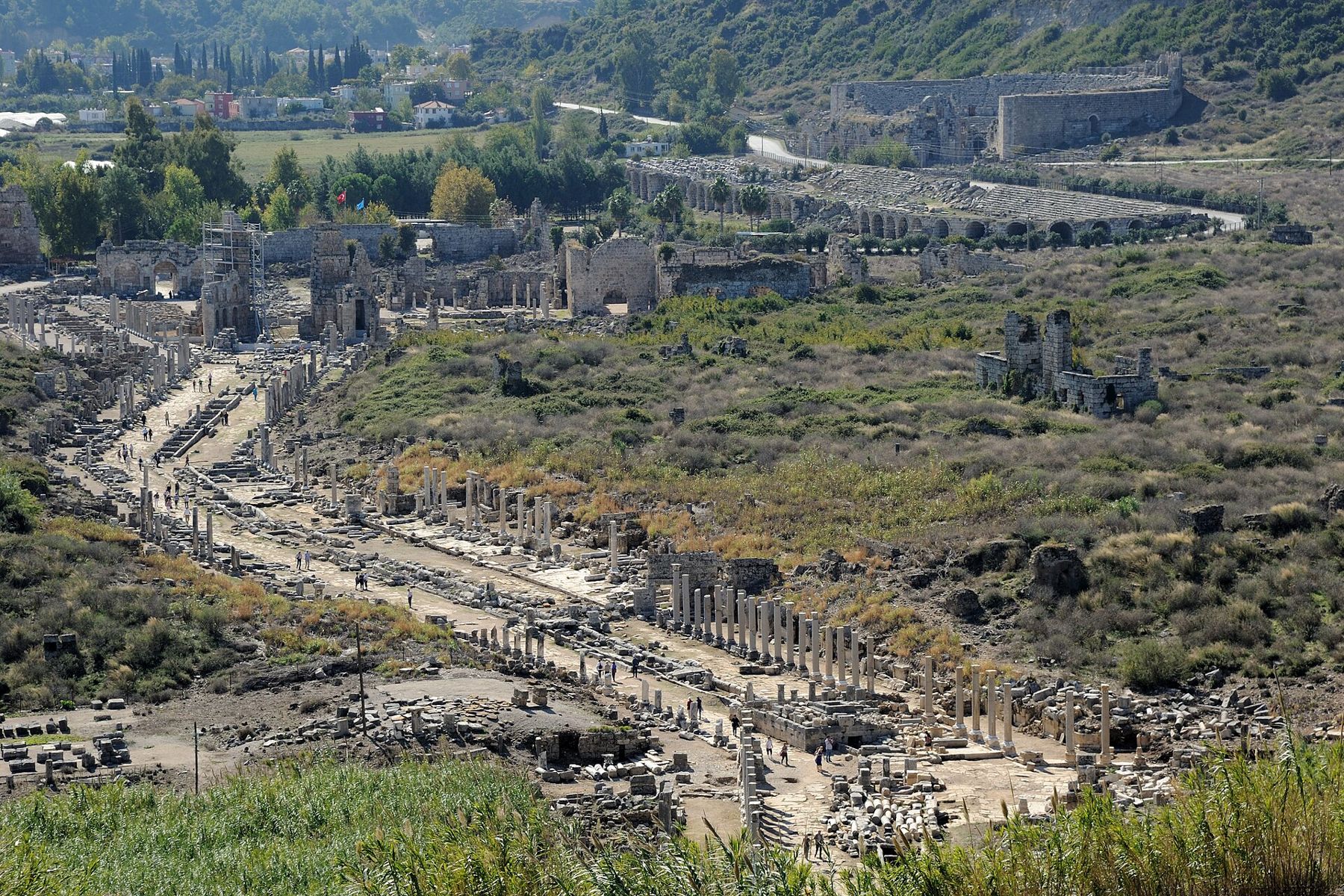
Perge sits on the flat land a little east of Antalya, under a low, flat-topped hill that was its first acropolis. Most of what you walk through is the lower city that grew below that hill in the Hellenistic and Roman centuries: a walled grid with a monumental gate, two long colonnaded streets, public baths, a market square, a theatre on the slope and a stadium outside the walls. It is not a site of dramatic scenery. Its strength is legibility. More than almost anywhere on this coast, you can stand in one place and understand how a Roman provincial city was laid out and how people moved through it.
The city was old before Rome arrived. Its own traditions tied its founding to Greek heroes after the Trojan War, which is a story rather than a date, and the visible remains begin in earnest in the Hellenistic period. Perge appears in the New Testament as a place Paul passed through, and it remained an important town into the Byzantine centuries before it shrank and was abandoned. What you see today is largely the result of long excavation and careful re-erection of fallen columns.
Through the outer gate to the round towers
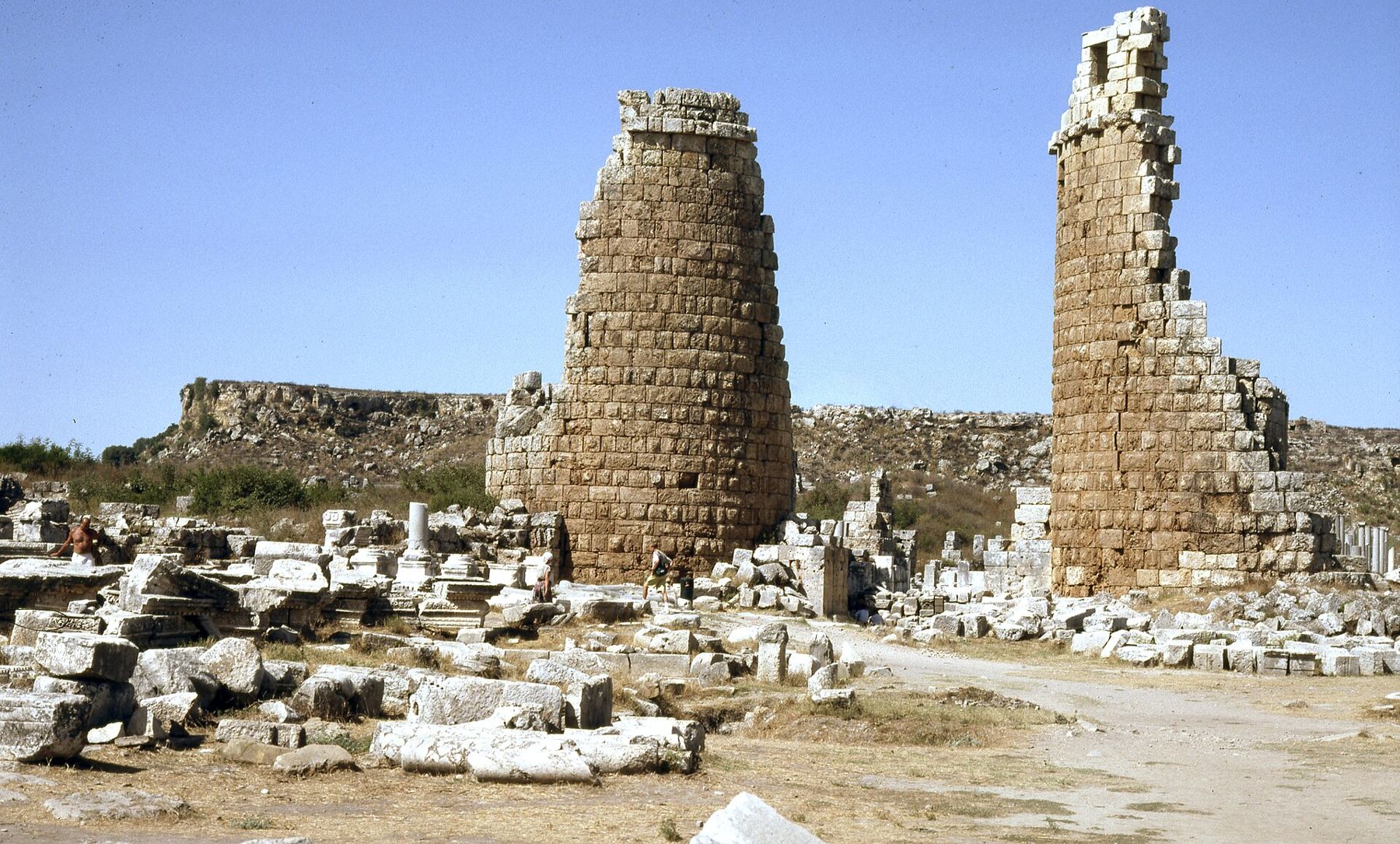
You enter near the late Roman outer gate, and the first thing that holds the eye is beyond it: a pair of tall round towers in squared stone, standing either side of the old entrance to the city. These are the Hellenistic gate towers, among the most recognisable ruins in Pamphylia. They belong to the city's defensive wall of the Hellenistic period, and their round form, with small windows high up, is a design meant for defence long before it became a backdrop.
Walk between the towers and you are in a horseshoe-shaped court. Its curving wall is lined with niches in two rows, and in the Roman period this court was turned from a military space into a stage for civic pride. In the second century AD a wealthy woman of the city, Plancia Magna, funded its rebuilding, and statues of gods, founders and members of the imperial family stood in the niches. Inscriptions naming her were found here, and several of the statues are now in the Antalya Museum. A triumphal arch closed the far end of the court and led straight into the main street.
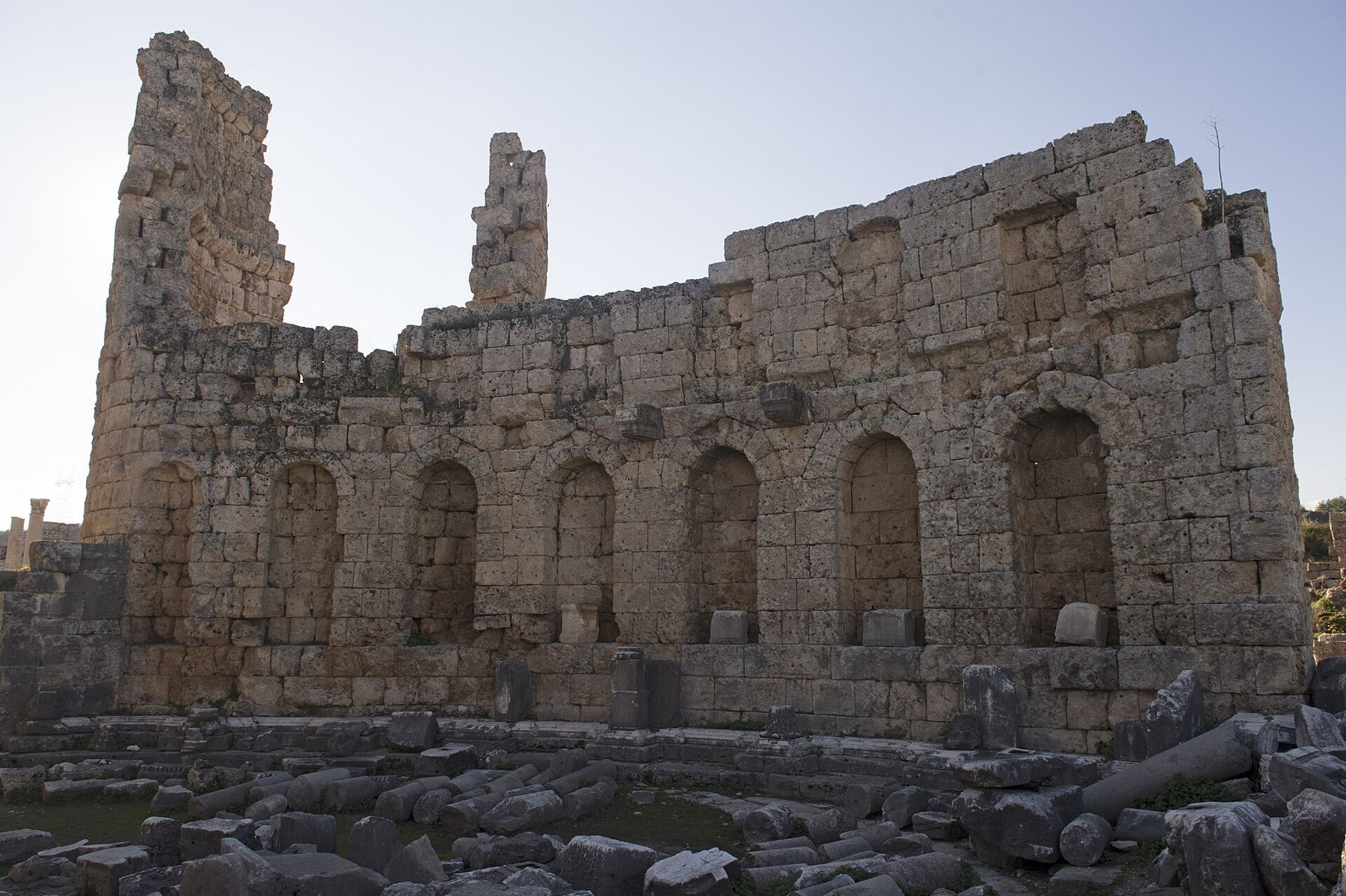
Stand in the middle of the court and turn slowly. The towers behind you were built to keep people out; the niches around you were built to impress people coming in. The same gate served both purposes in different centuries, which is a good first lesson in how to read Perge.
The colonnaded street and its water channel
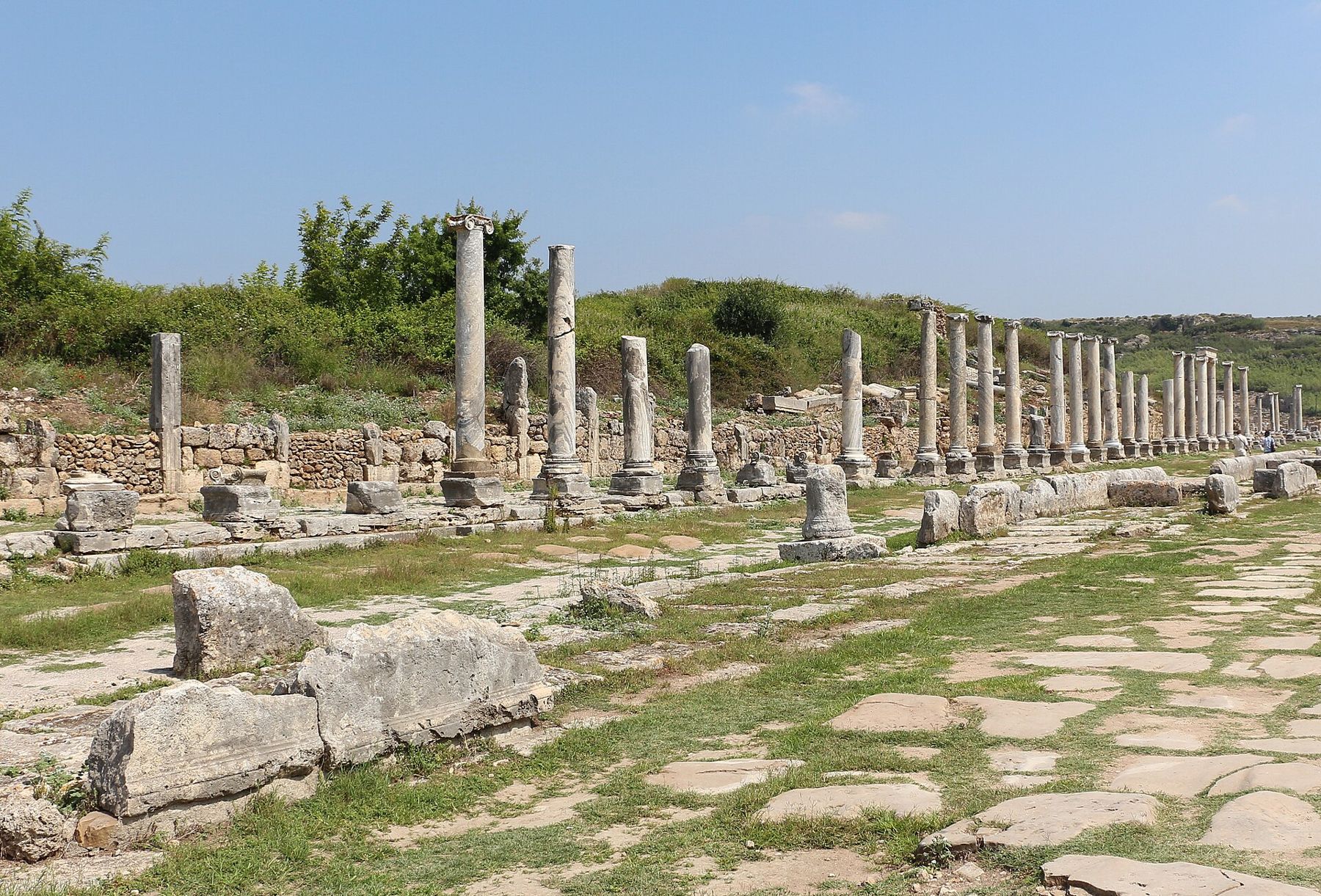
Beyond the court the main street runs north towards the foot of the acropolis hill. It is long, straight and wide, lined on both sides by columns that once carried roofed porticoes, with shops opening behind them. Many of the columns have been set upright again, and the effect, especially in low morning light, is of a corridor of stone that pulls you forward.
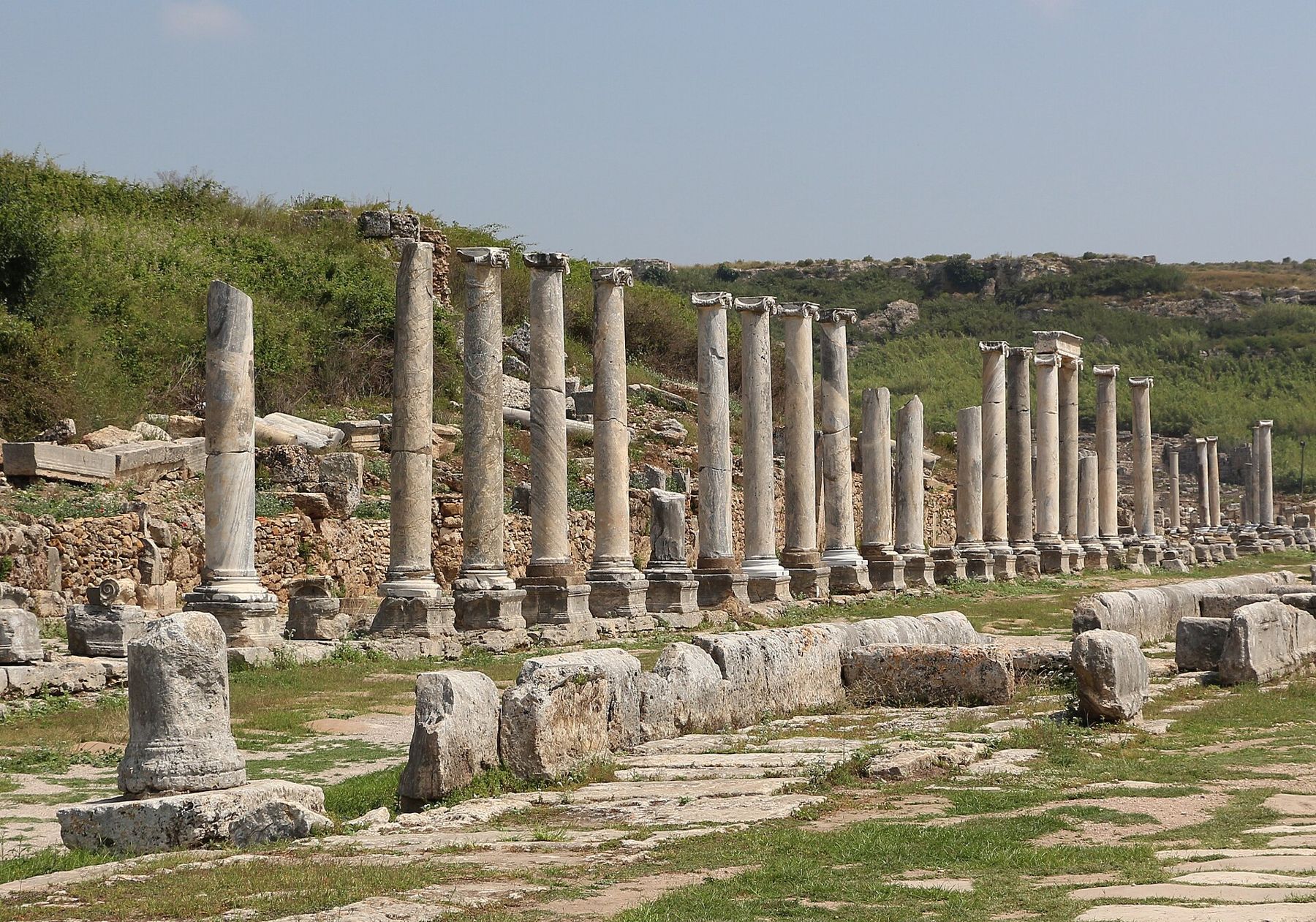
Down the centre of the street runs the feature that makes Perge memorable: an open stone water channel, divided into a series of shallow basins with small drops between them. Water came down from a monumental fountain at the top of the street, under the acropolis, and flowed the whole length of the avenue. In summer heat it must have cooled the air as well as pleasing the eye.
Water came down from a monumental fountain at the top of the street, under the acropolis, and flowed the whole length of the avenue.
Walk the street slowly and look at the paving. Wheel ruts are cut into some of the stones, and here and there you can pick out reliefs on the column shafts and fragments of inscriptions on fallen blocks. A second colonnaded street crosses the main one at right angles, running east to west, and the crossing is a good place to stop and get your bearings.
Baths, agora and the city's daily life
West of the gate court lie the large southern baths, a sequence of halls that took bathers from cold to warm to hot rooms. You can still see the hypocaust system in places: small stacks of tiles that held up the floors while hot air from furnaces moved beneath them. The bathing complex also had a palaestra, an open exercise yard, and parts of its marble floors and wall facings survive.
East of the gate is the agora, a square market surrounded by shops, with a round building at its centre. Its exact function is discussed, but a market square with a central round structure was a familiar Roman arrangement. Some of the shop thresholds keep the grooves for sliding shutters, which tells you more about ordinary life here than any statue.
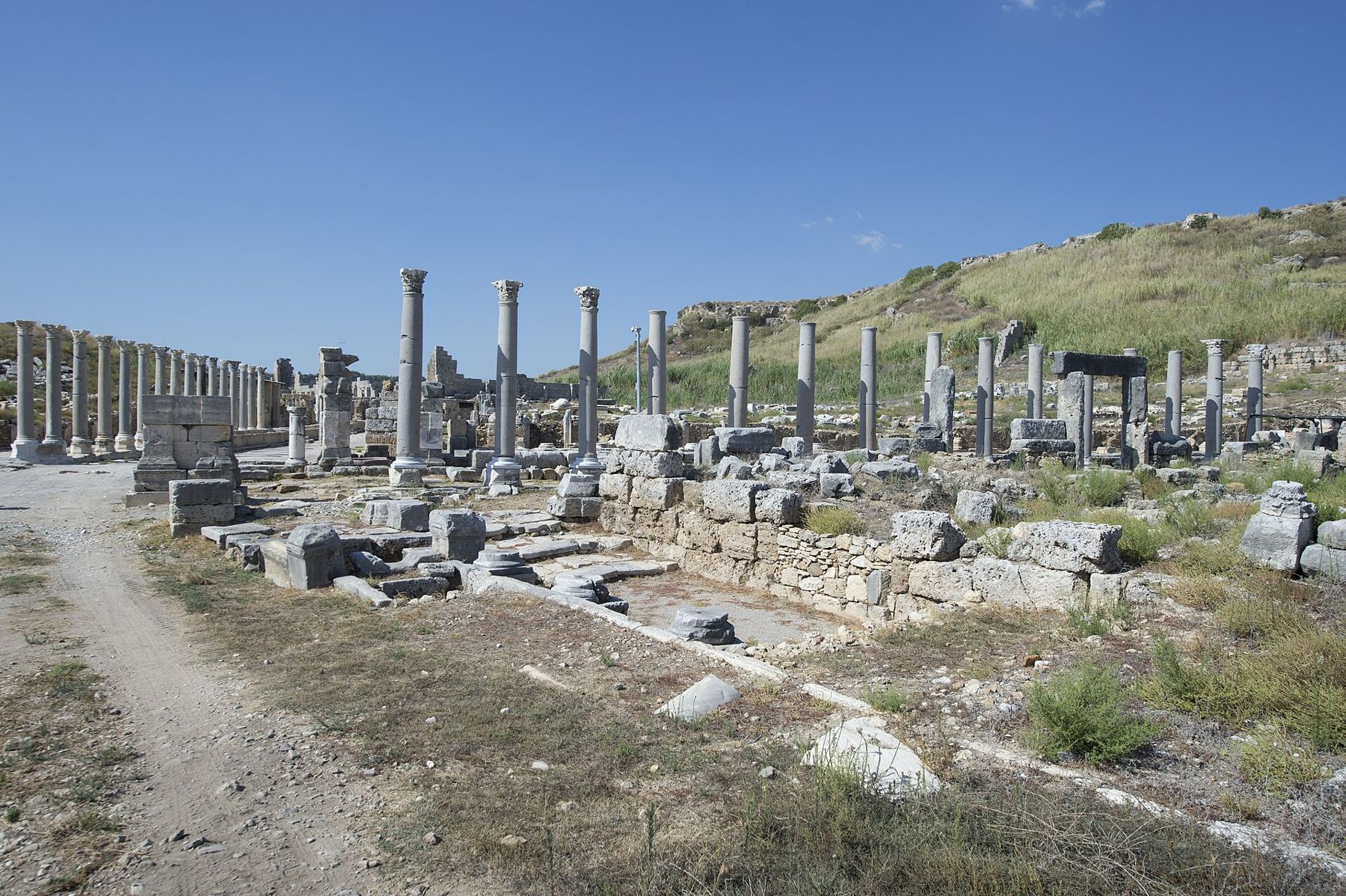
At the north end of the main street, the fountain at the foot of the acropolis is in ruins, but its position explains the street: everything in the lower city was oriented towards this hill and the water that came from it. The hill itself has fewer remains and is often less accessible; if paths are open, the climb is short and the view back down the street is worth having.
The stadium and the theatre
Outside the walls, south of the city, the stadium is one of the best preserved in Anatolia. It is a long, narrow U-shape with seating on vaulted substructures, and many of those vaults under the seats were used as shops. Some still carry painted or carved marks that are read as shopkeepers' names or numbers. You can walk the length of the track and sit on the rows to judge the scale.
The theatre stands on the hillside nearby. It is a large Roman theatre with a richly carved stage building, including reliefs connected with Dionysos. The theatre has been under restoration for long periods and is not always open to visitors, so treat it as a bonus rather than a promise. If it is closed, the stadium gives you the same sense of a city that gathered in thousands.
Many of the finest statues and sarcophagi from Perge are in the Antalya Museum, and seeing them before or after the site fills in what the bare niches and empty plinths leave out.
Heat, timing and how to see it well
Perge is flat, open and almost entirely without shade. From late spring to early autumn the midday sun on the paving and white stone is fierce, and summer midday here is genuinely dangerous for anyone who underestimates it. Arrive as close to opening time as you can, or come in the last couple of hours before closing. Carry more water than you think you need, wear a hat and sun cream, and choose closed shoes for the uneven stone.
- Allow two to three hours for the gate, the main street, the baths and the agora, plus the stadium.
- Entry is paid, and fees, museum cards and opening hours change: check before you go.
- Spring brings wildflowers between the stones; late autumn brings softer light and cooler air.
Perge pairs naturally with other sites east of Antalya. Many people combine it with the theatre at Aspendos on the same day, and the temples by the harbour at Side lie further along the same coast. If you want contrast, the mountain city of Termessos west of Antalya is everything Perge is not: steep, wooded and scattered.
Walk out the way you came, back through the towers. With the street behind you and the hill at your back, you have seen the whole idea of the city: a defended gate, a ceremonial court, a street of shade and water, and the places where people bathed, traded and watched games.