 LYCIAN STONES
The valley of the Eşen Çayı, the ancient Xanthos river, runs inland from the coast between high mountains. Along its sides stood several of the most important cities of Lycia, and two of them, Tlos and Pinara, make a pair worth seeing together. Both were among the six largest cities of the Lycian League, and both were built against cliffs that their people turned into cemeteries. Tlos stands on the eastern side of the valley, Pinara on the western side, and between them you see much of the range of Lycian rock-cut tombs.
Tlos and its acropolis
Tlos sits on a steep hill above the village of Yaka, with the mountains rising behind. It is one of the oldest cities in Lycia; its name is widely identified with Dalawa in Hittite records, and the hill remained inhabited into the Ottoman period.
The acropolis is crowned by the remains of an Ottoman fortress, built in the nineteenth century by a local lord on top of older walls. Below it, in the cliff face, are rows of rock tombs, several with temple-like fronts: columns, pediments and carved doors.
One of them is known as the tomb of Bellerophon. On the wall beside its entrance, a relief shows the hero riding the winged horse Pegasus. In Greek myth Bellerophon killed the Chimaera, a fire-breathing monster that ancient writers placed in Lycia, and the relief suggests that the family buried here wished to be linked with him.
The tombs are reached by a short but steep and rough path. Take care: the ground is uneven and some edges are exposed.
The lower city of Tlos
Below the acropolis lie the stadium, the baths, the agora and a theatre. The stadium is laid out on flat ground, with rows of seating along one side. The baths, built on the edge of the slope, have large windows facing the valley, and the view from them over the plain to the mountains is one of the finest on any Lycian site.
The theatre stands on the far side of the lower city and has been partly restored. Its seating is well preserved, and carved blocks from the stage building lie in front of it.
Pinara and its cliff
Pinara stands on the western side of the valley, above the village of Minare. The city was built at the foot of a huge, sheer rock face, and the upper part of that face is honeycombed with hundreds of small rectangular openings. These are taken to be rock tombs, cut into the cliff at heights that seem impossible to reach.
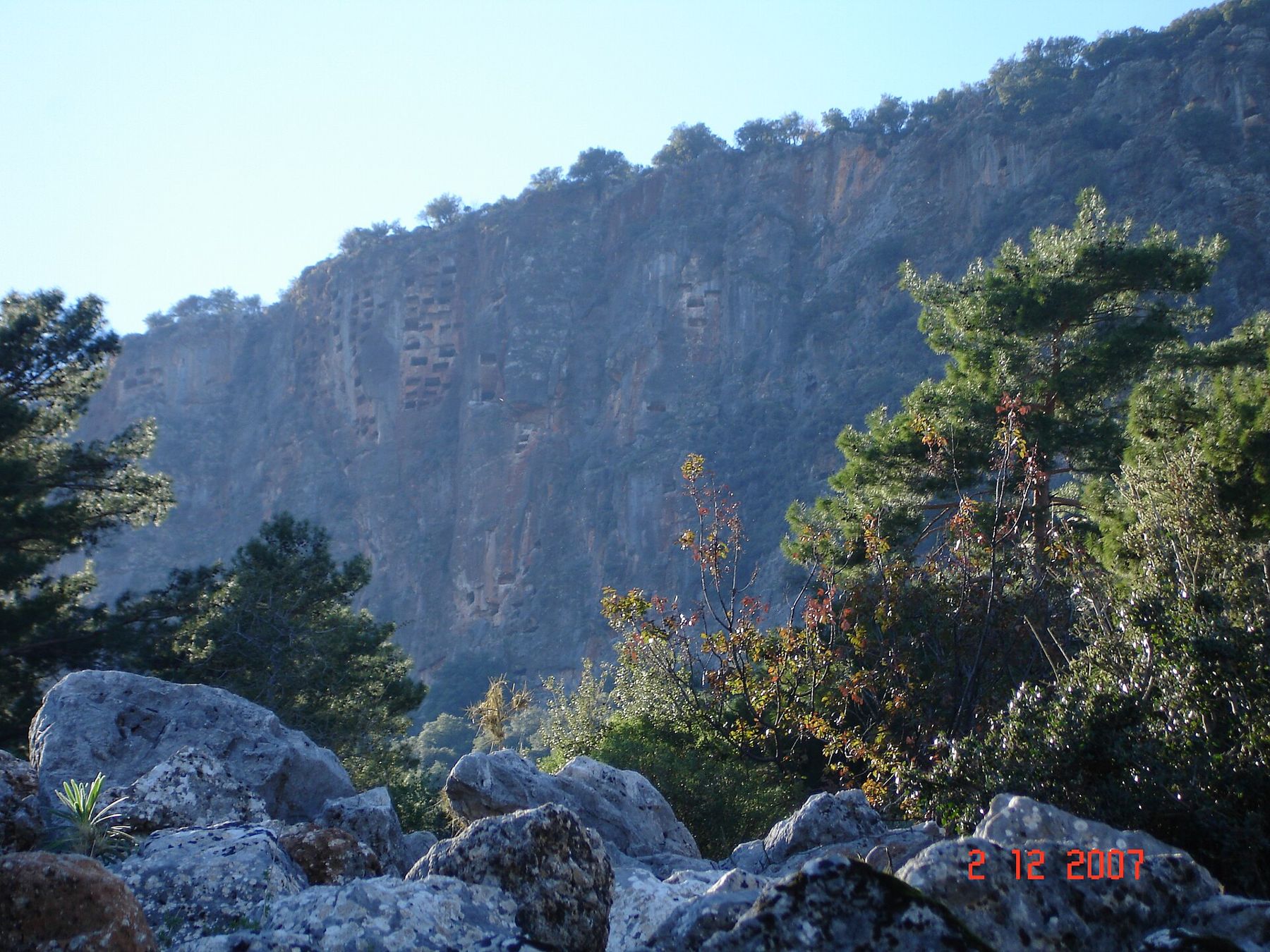
How the openings were cut and how the dead were placed in them is not known for certain. Ropes or wooden scaffolding from above are the usual suggestions. Whatever the method, they are among the most striking sights in Lycia, and binoculars help you see their shapes. Light matters here: when the sun strikes the face at a low angle, each opening throws its own shadow, and the honeycomb stands out far more sharply than under a flat midday sky.
Below the cliff, the city spreads over lower ground and a smaller hill. Its remains include an agora, temples, and several tombs with carved reliefs, among them the so-called Royal Tomb, whose reliefs show a walled town with buildings and figures. A carving of a city in stone is unusual, but it is weathered, and you need time and a low sun to make it out.
Pinara's theatre
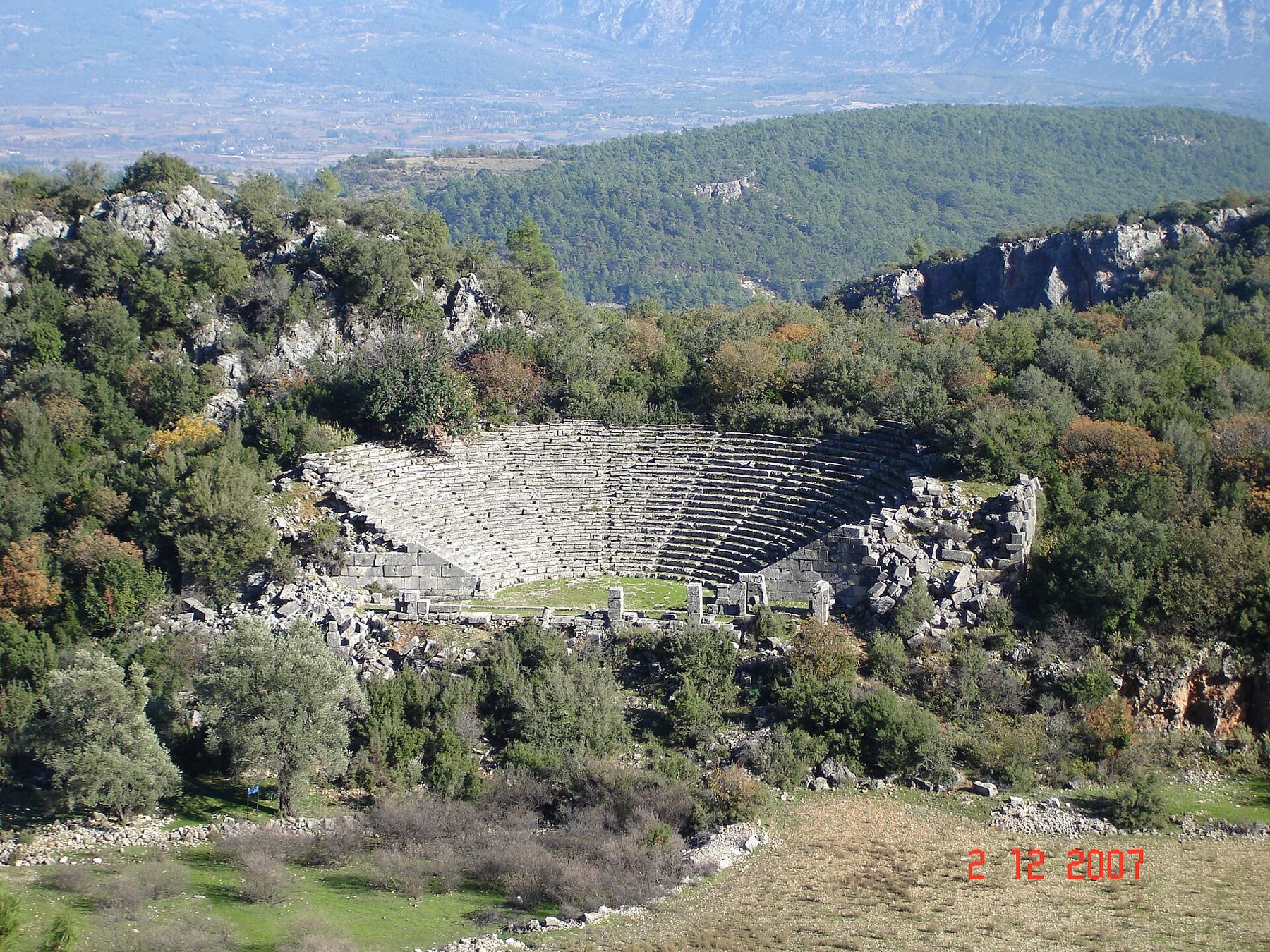
The theatre of Pinara lies a little apart from the city, on a slope facing the cliff. It is a small Greek-style theatre, well preserved, and its rows of seats look across to the honeycombed rock face.
The setting is quiet, with few other visitors, and the theatre is one of the best places in Lycia to sit and take in a landscape that has changed slowly over a very long time.
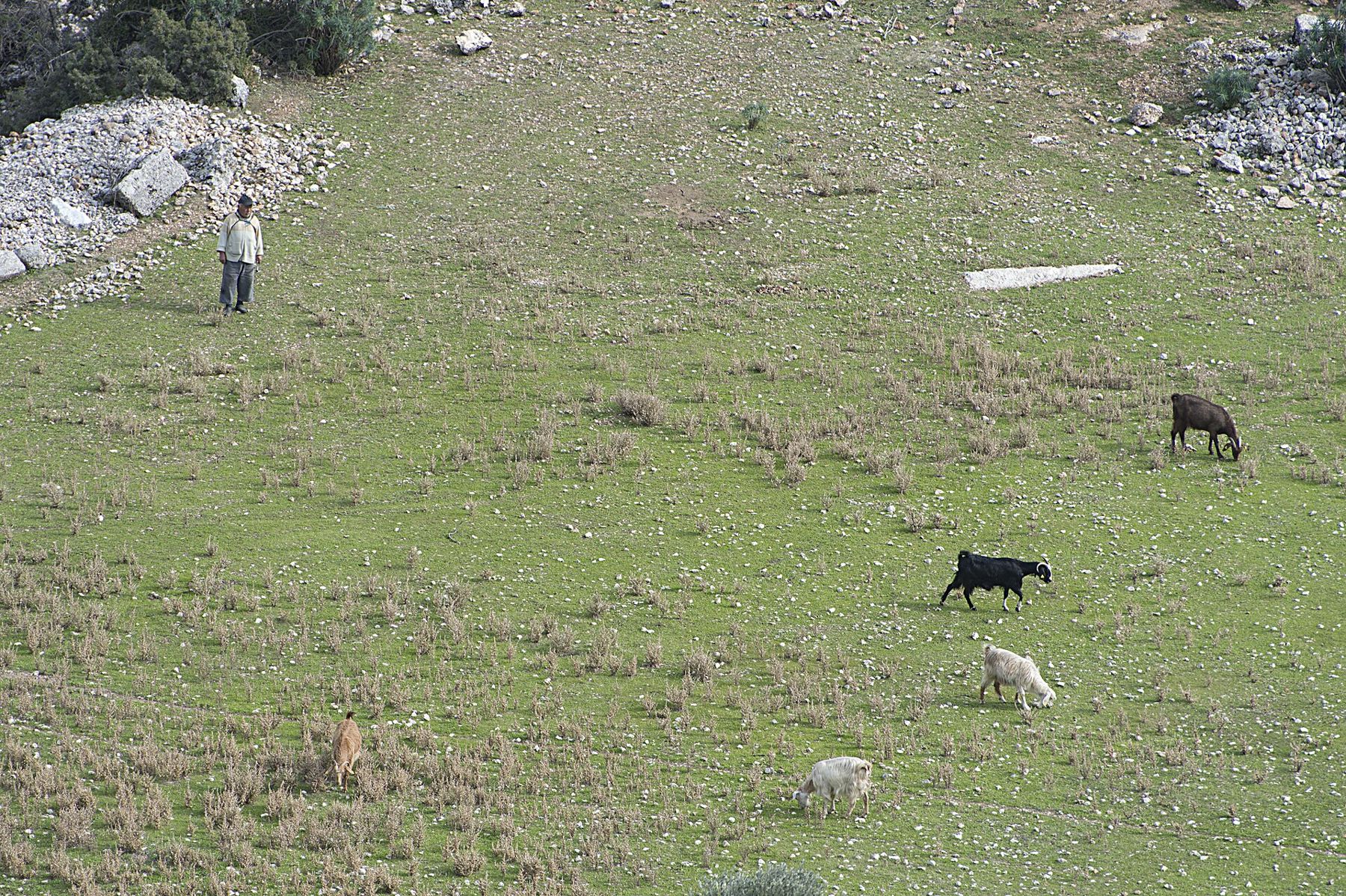
Pinara is less visited than Tlos, and its paths are rougher and less marked. The site is surrounded by woodland and pasture, and you may share it with grazing animals.
Reading the tombs
The two sites together show almost every kind of Lycian tomb: house tombs, temple tombs, cliff openings and sarcophagi. The temple-fronted tombs of Tlos borrow the look of Greek buildings, while the small openings of Pinara are plain and repeated, more like a filing system than a monument.
The guide to reading Lycian tombs explains how these forms developed and what each one copied.
Getting there and planning
Both sites lie inland from Fethiye, in the valley north of Xanthos. A car gives you the most freedom; the sites are not well served by public transport, and the final access roads can be narrow and steep.
- Entry fees, museum cards and opening hours change; check before you go.
- Allow around two hours for each site.
- Paths are rough and exposed. Go early in summer and carry water.
Combine them with Xanthos and the Letoon further down the valley, or with the harbour city of Patara on the coast. If you have more time, the cliff paths above Faralya lie on the far side of the mountains near Fethiye.
When you leave, look back at the cliffs. At Tlos, the tombs rise in tiers under the fortress; at Pinara, the openings cover the rock like the cells of a hive. In both places the dead were set where the living would see them every day.