 LYCIAN STONES
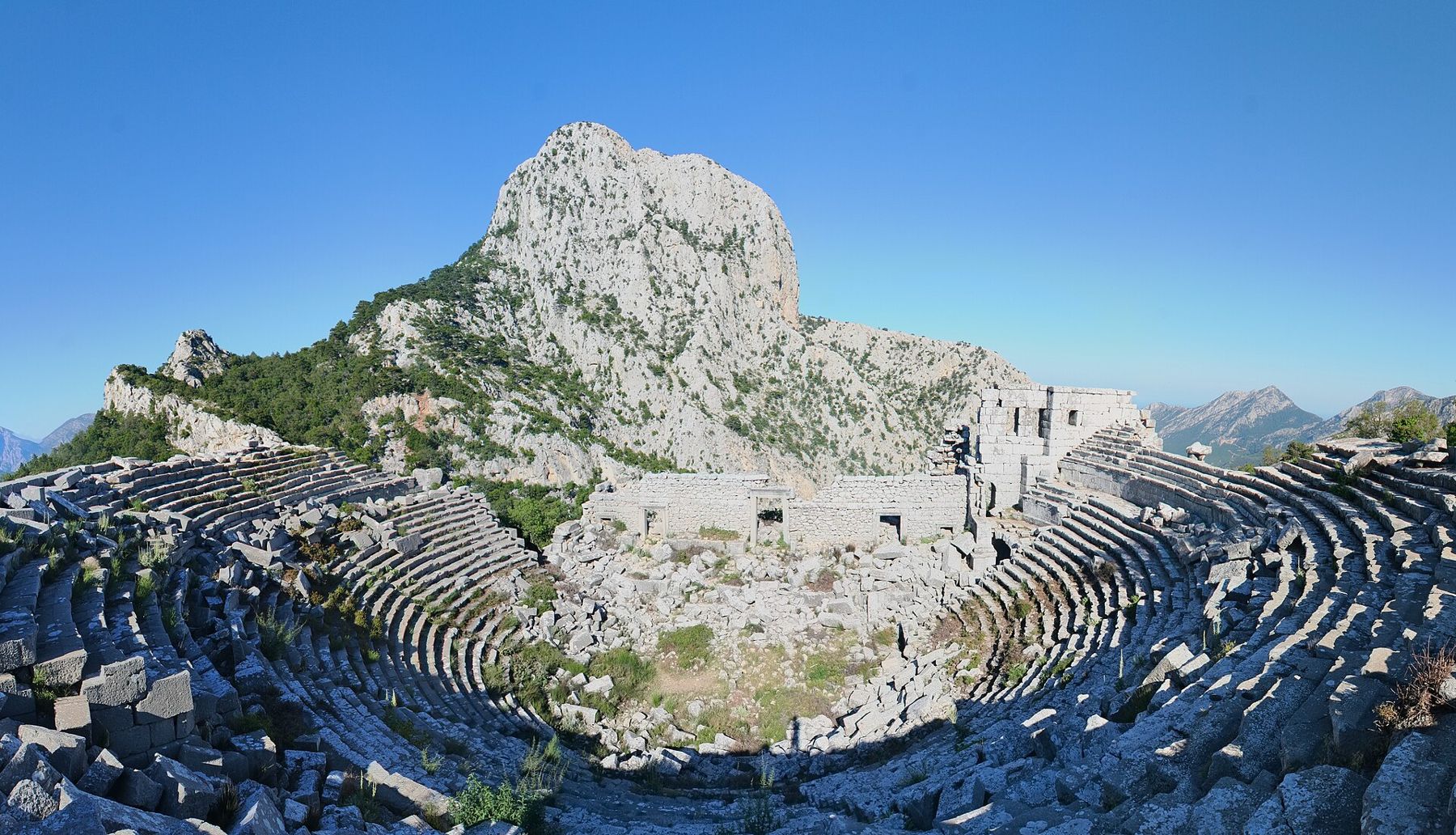
Termessos is the most dramatic ancient site near Antalya, and the most demanding. It sits high on the slopes of Güllük Dağı, the mountain west of the city, inside a national park of pine and oak forest. There is no flat lower town here. The city was built on a saddle and on steep ground between rock walls, and it was defended as much by its position as by its walls. You reach it by a winding road and then a climb on foot, and once you are among the ruins the sense of height and isolation is strong.
The people of Termessos were Pisidians, an inland people of the Taurus mountains, not Greeks of the coast. They used Greek and lived in a city of Greek and Roman type, but they kept a reputation for independence. Ancient tradition records that Alexander the Great approached the city in the fourth century BC and did not take it, moving on instead. Later Termessos became an ally of Rome and kept a large degree of self-government.
The approach and the climb
The road ends at a parking area below the city, and from there a path climbs through the lower gate and up the slopes. It is steep, stony and uneven, with steps of rough rock in places. Depending on your pace and how often you stop, the climb to the theatre takes around half an hour to an hour. Shade from the trees helps in the lower part; higher up you are more exposed.
On the way you pass sections of the city wall and the remains of a monumental gateway, usually called the Gate of Hadrian, though only parts of its structure stand. The ruins are spread out and not always signposted clearly, so take a moment at each junction to see where paths lead.
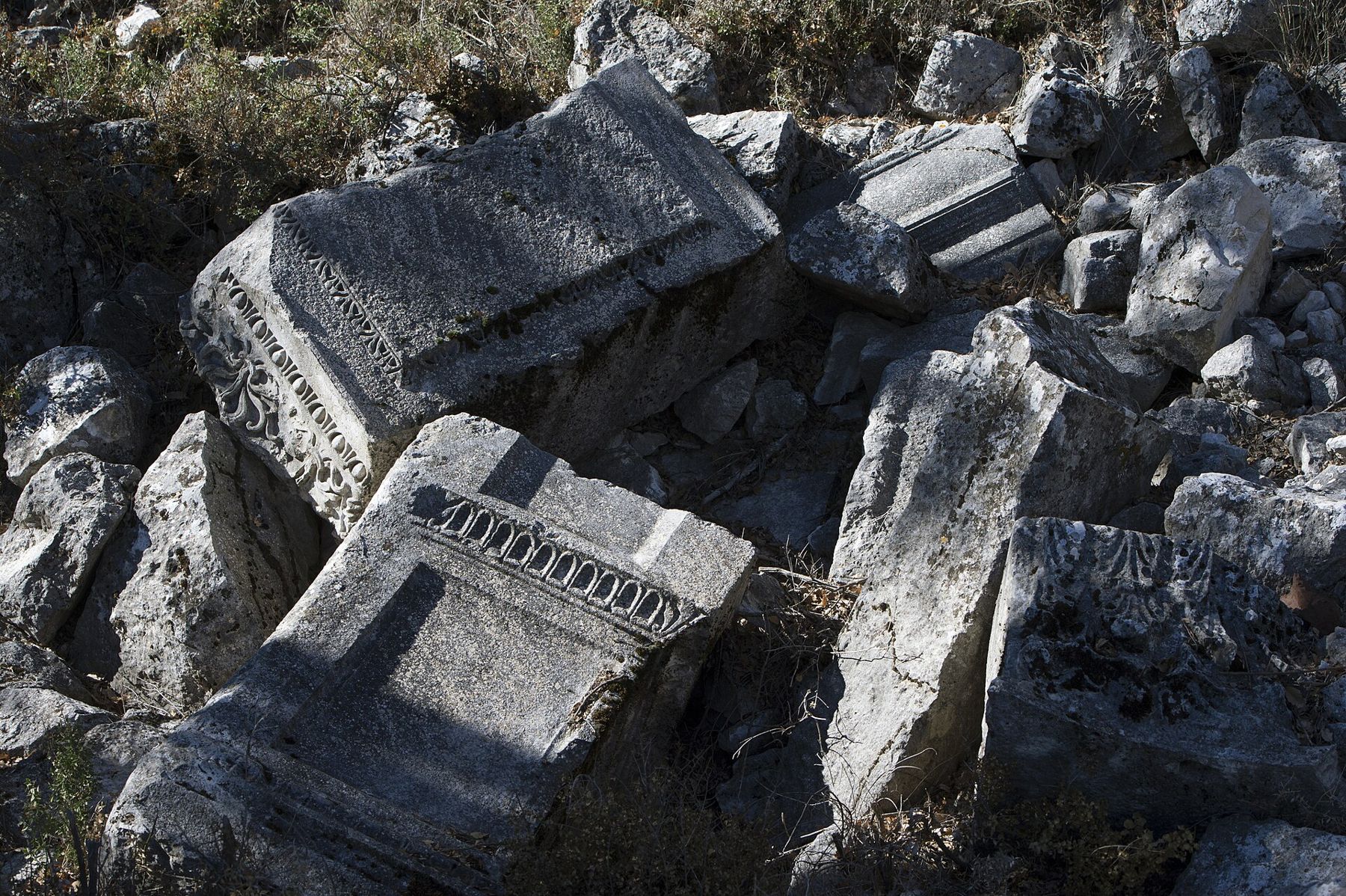
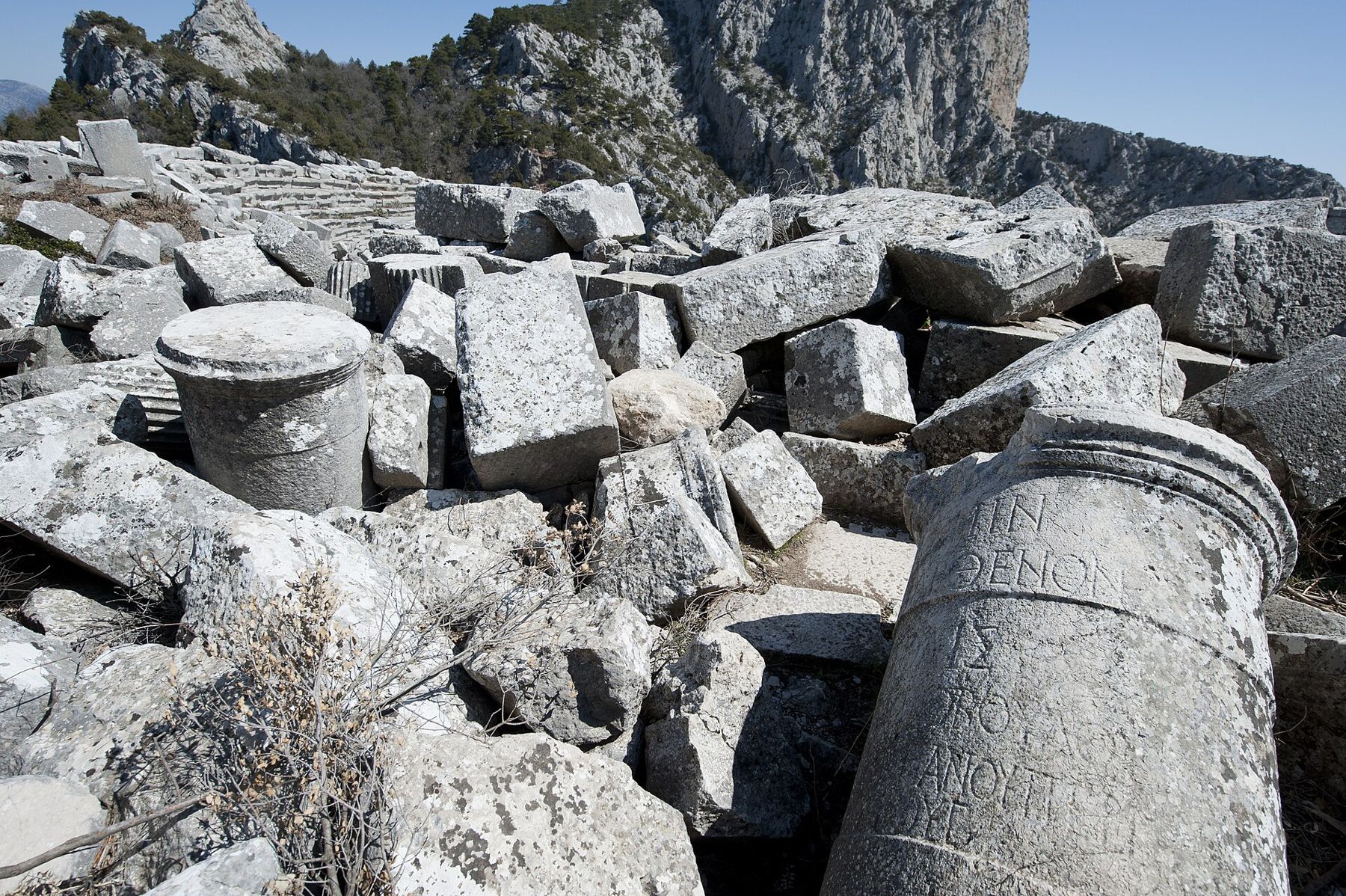
The city is not tidy. Earthquakes brought down much of it, and fallen blocks lie as they fell, often half-hidden under shrubs and trees. This is part of its character: you walk through a ruin, not a reconstruction.
The theatre at the edge
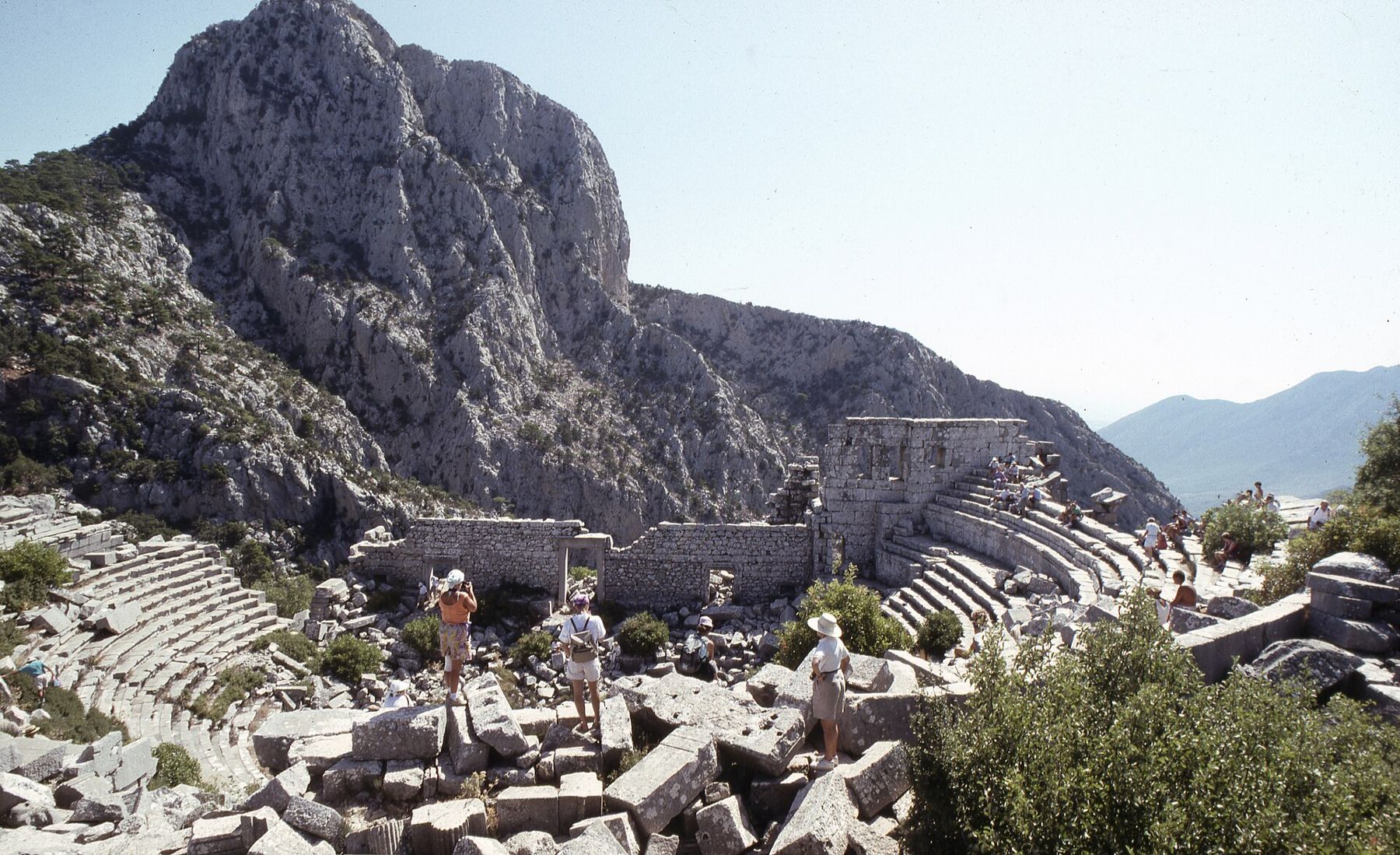
The highlight of Termessos is its theatre, set on the edge of the mountain with a sheer drop beyond the stage. The seating faces the peak of the mountain on one side and, on the other, the long view down to the Pamphylian plain and, on a clear day, the gulf of Antalya. It is smaller than the great theatres of the coast, seating a few thousand, but its position is unlike any other.
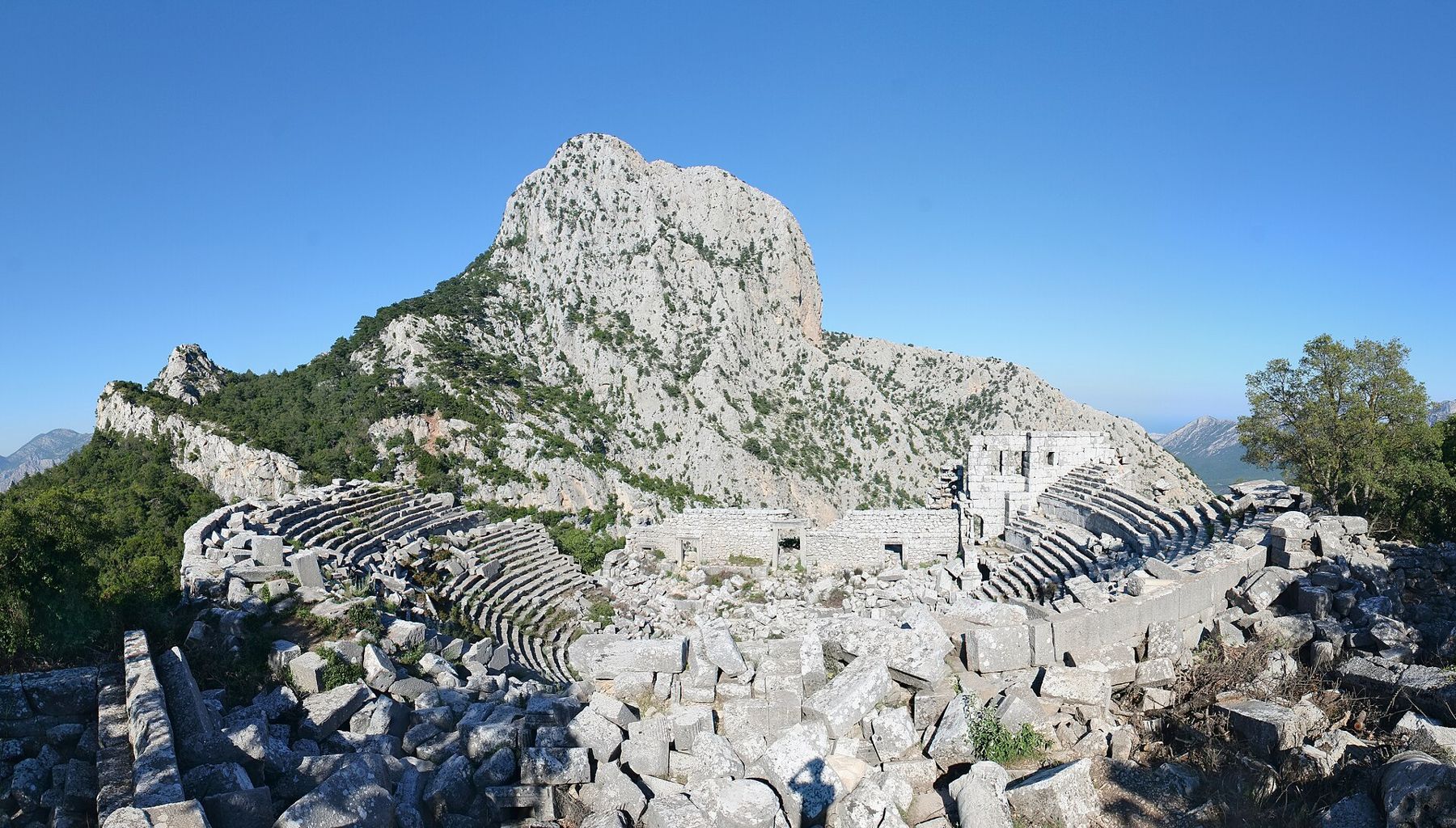
The theatre was built in the Hellenistic period and altered in Roman times, when a stage building was added. Much of the stage building has collapsed, but the seating is well preserved, and you can sit on the upper rows and look out across the mountains.
The theatre was built in the Hellenistic period and altered in Roman times, when a stage building was added.
Look at the setting from the top rows. The rock peak of the mountain rises behind the seating, and the drop beyond the stage falls away into a valley of forest. The builders chose the spot with care: the audience faced out over open space, and the landscape itself became part of what they watched. Few ancient theatres anywhere make such use of their surroundings.
Take your time here. The light changes the colour of the stone through the day, and the silence, broken only by wind and birds, makes it easy to imagine the city full.
The city centre
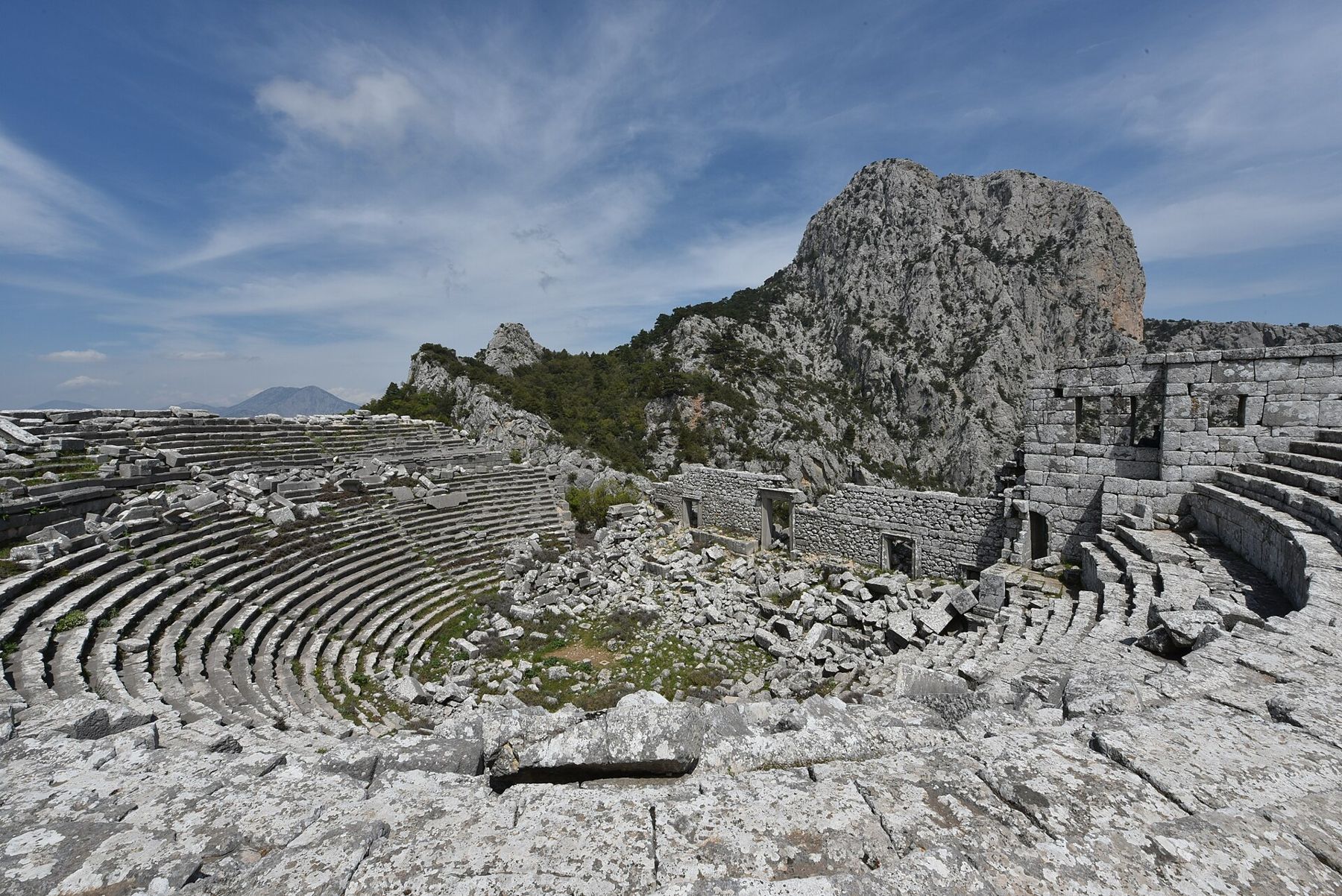
Near the theatre lie the remains of the agora, and under it a series of large cisterns cut into the rock. On a mountain without a river, collecting and storing rainwater was essential, and the cisterns are among the most impressive works in the city. Take care around their openings.
Beside the agora stands a building usually identified as the bouleuterion or odeon, a covered hall used for council meetings or performances. Its walls stand high, with rows of windows, and it is one of the best-preserved buildings on the site. Nearby are the remains of several temples, though they are mostly reduced to their foundations and scattered blocks.
The forest is part of the visit. The national park protects pine and oak woodland on the mountain, and its wildlife includes birds of prey and, on the higher rocks, wild goats. Even in high summer, the shade of the trees in the lower city gives some relief, and in spring the ground between the stones is green with plants that are gone by June.
The gymnasium and baths lie lower down, built of dark stone and partly overgrown. The layout is not always easy to follow, and paths between the buildings are rough.
Rock tombs and the necropolis
Termessos is known for its tombs. Rock-cut tombs with house-like façades are carved into the cliffs, and the upper slopes of the city hold a large necropolis of sarcophagi. Many of these lie broken open and scattered, toppled by earthquakes and disturbed by robbers. The carved decoration on them, shields, garlands and lions, is often still clear.
One rock tomb with a relief of a horseman is traditionally linked with Alcetas, a general of the period after Alexander, but the attribution is debated. Whatever the name, the carving and the setting are striking. If you want to understand how different tomb types developed across the region, the guide to reading Lycian tombs compares the coastal styles.
Read the sarcophagi as you pass. Many stand on stepped bases, some carry inscriptions in Greek naming the dead and warning against reuse of the tomb, and a few have lids shaped like gabled roofs. Their scattered state is not only the work of time: earthquakes shook the whole slope, and the city was eventually abandoned, leaving no one to set the stones right.
Reaching the necropolis means more climbing on uneven ground. Allow extra time and go carefully.
Planning the visit
- Termessos lies inside the Güllük Dağı national park. Entry fees and opening hours change; check before you go.
- Allow at least three hours, more if you want to explore the necropolis.
- Wear hiking shoes. Paths are rough and loose in places.
- Take plenty of water. There is little to buy on the mountain.
- In summer, go early. The heat on the upper slopes at midday is dangerous.
Termessos makes a strong contrast with the cities of the plain. After the order of Perge and the restored theatre at Aspendos, the mountain city feels wild. If you enjoy the climb, the walking paths of the Lycian Way further west offer similar landscapes over longer distances.
Come down slowly. The path is harder on the knees going down than coming up, and the view of the forest and the plain below is worth stopping for.