 LYCIAN STONES
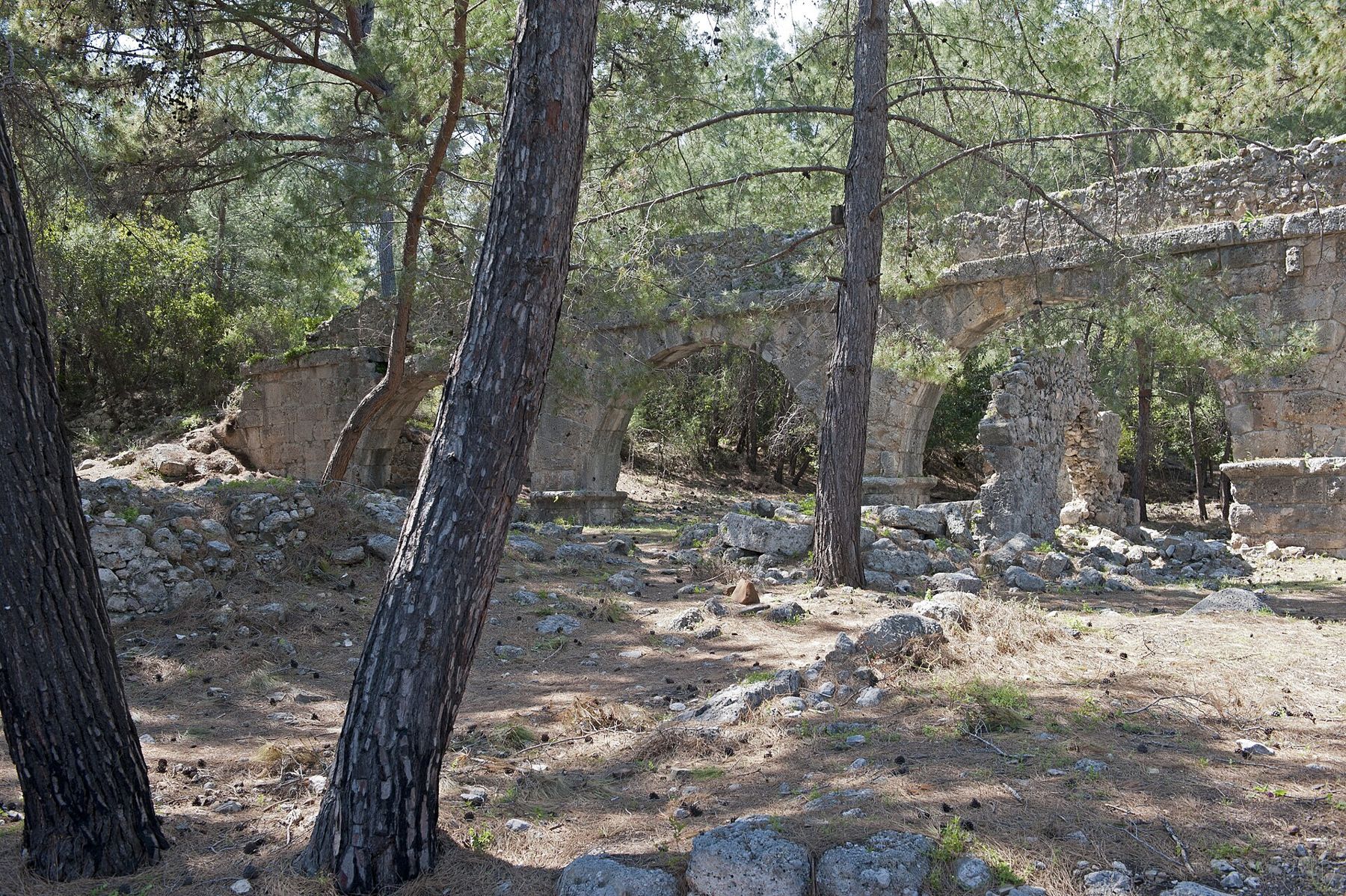
Phaselis sits on a small peninsula on the coast south of Antalya, with forest behind it and water on three sides. It was a trading city, and its whole layout is built around the sea: a harbour on the north, a small enclosed harbour in the middle, a large bay on the south, and a paved main street running between them. Pine woods come down to the ruins, and in the early morning, before the day boats arrive, it is one of the most peaceful ancient sites on this coast.
A Greek city on the edge of Lycia
Phaselis was not a Lycian foundation. It was settled by Greek colonists from Rhodes, traditionally in the seventh century BC, and for long periods it stood apart from its Lycian neighbours, a commercial city that looked to the sea. Its position, between Lycia to the west and Pamphylia to the east, made it a natural stopping place for ships moving along the coast.
Alexander the Great passed through in the late fourth century BC and is said to have spent part of a winter here. Later the city came under Roman rule and prospered. Most of what you see today, the street, the agoras, the baths, the theatre and the aqueduct, belongs to the Roman centuries. The city declined in late antiquity, and the harbours silted and fell out of use.
The harbour street
The main street is the spine of the visit. It runs across the neck of the peninsula from the small central harbour towards the large southern bay, wide and paved with stone slabs, and is lined on both sides with the remains of public buildings: agoras, baths and shops. Parts of the paving are well preserved, and you can follow it easily on foot.
At its southern end stand the remains of the gate associated with the emperor Hadrian, who visited the region in the second century AD. The gate is fragmentary, but pieces of its inscription survive. Halfway along the street, steps lead up to the theatre, small and set into the slope, with pines growing among its seats and a view back over the street.
The baths near the street have well-preserved rooms where you can see the underfloor heating system: small pillars of tiles that once carried the floors over hot air. Compare the street here with the far grander colonnaded avenue at Perge: Phaselis is smaller, more intimate, and closer to the water.
Walk the street slowly and read its edges. The kerbs and the lower courses of the building fronts survive better than anything above them, so the city appears as a plan drawn in stone: thresholds, the bases of columns, the outlines of rooms opening onto the paving. Fragments of carved cornices and inscribed blocks lie where they fell or where excavators have set them aside. Few of them are labelled, and much of the pleasure is in noticing them for yourself as you go.
Three harbours
The three harbours explain the city. The north harbour was open and used by larger ships in certain weather; the small central harbour, protected by a breakwater, was the city's sheltered port; and the big southern bay was the main harbour for trade. You can still trace parts of the ancient moles and breakwaters under the shallow water in places.
Today the southern bay is where day boats anchor and where the crowds gather in summer. Small coves near the ruins are used for swimming; that is the business of a beach guide, but a short cool-down after a hot walk is part of the day here for many people.
The aqueduct in the pines
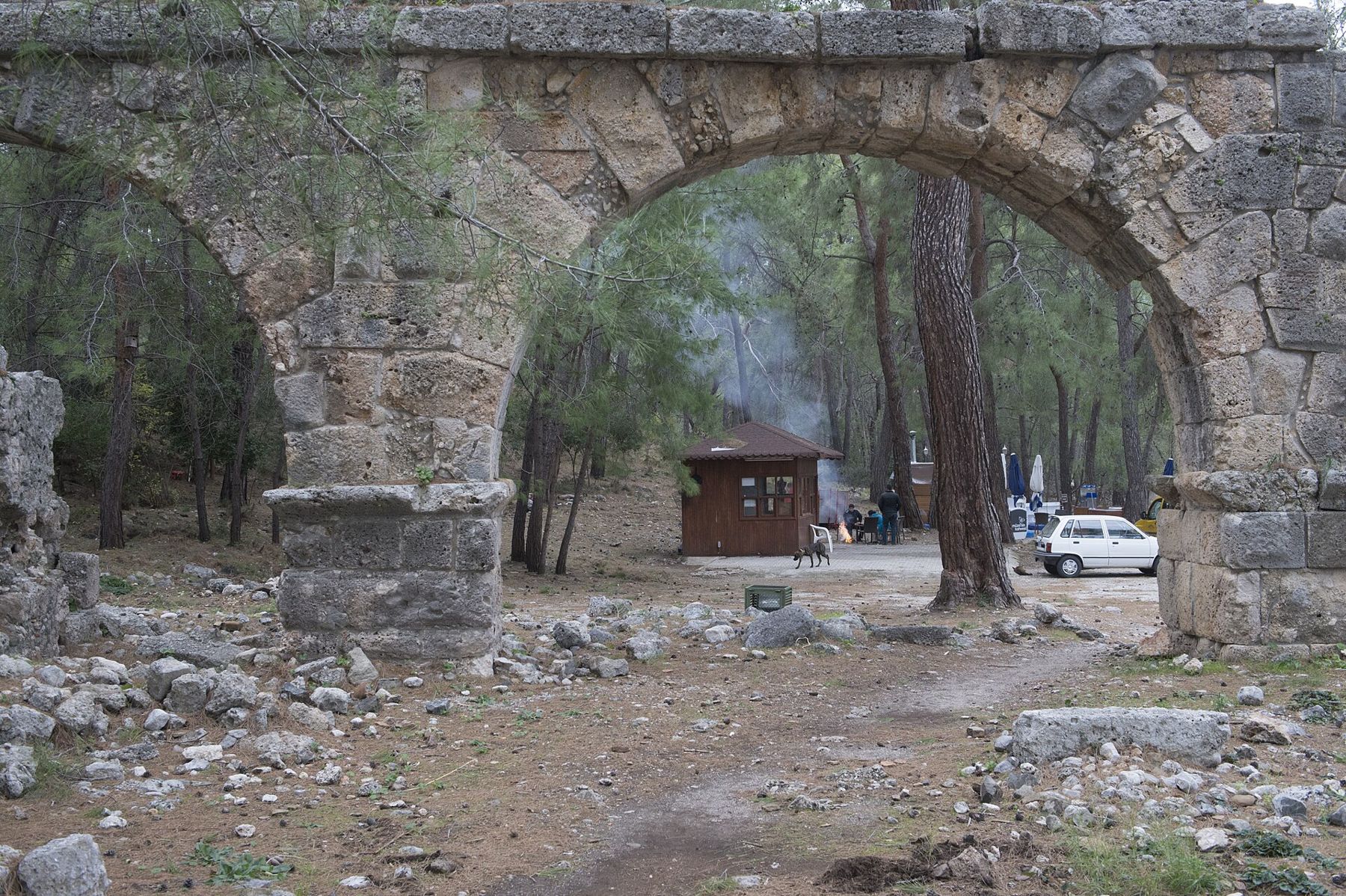
As you come in from the car park, the first large monument is the aqueduct. It brought fresh water to the city from springs inland, and its remaining arches run for a good distance through the pine forest, in places quite high.
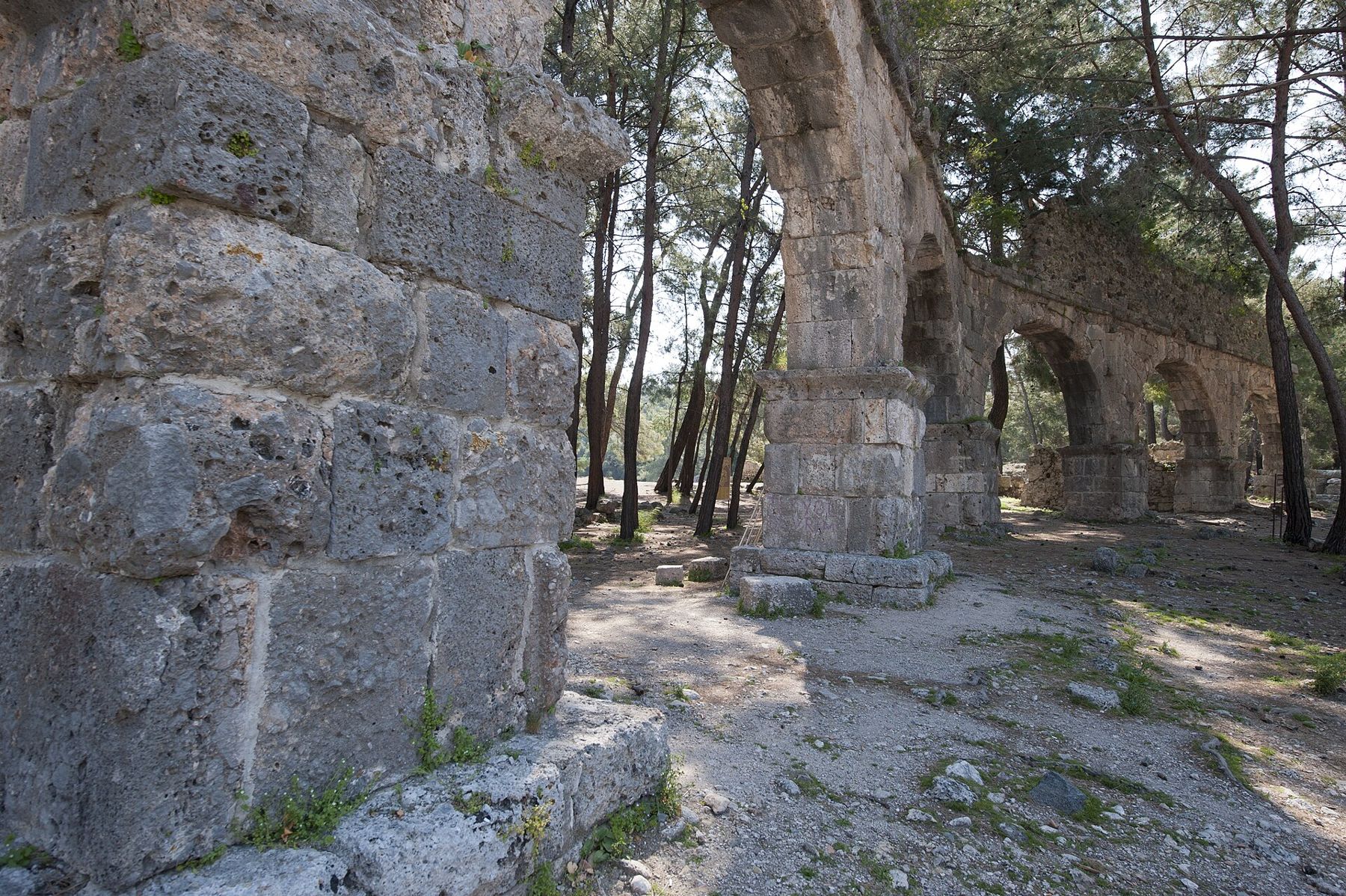
The blocks are cut from a rough, porous local stone, and you can see how the arches were built in courses, each block wedged against its neighbours. Where the structure has broken, you can look into the channel at the top and see the shape of the water conduit. The ruins of the aqueduct and the trees together give the site its particular character: Phaselis feels as much like a forest walk as a ruin.
Early hours and practical details
Phaselis is easy to reach: it lies just off the main coast road between Antalya and Kemer to the north and Tekirova to the south, inside the Olympos Beydağları National Park. Day boats from nearby resorts call here, and the site is busiest from late morning to mid-afternoon in summer. Arrive at opening time and you will have the street and the theatre almost to yourself, with soft light and cool air under the pines.
- The site has an entry fee and set opening hours; both change, so check before you go.
- Paths are mostly flat and shaded, but the ground is uneven; wear shoes with grip.
- Carry water; the shade helps, but midday heat in summer is still hard.
- Allow about two hours to walk the aqueduct, street, theatre and harbours without hurrying.
Around Phaselis
Phaselis pairs well with Olympos and the Chimaera flames further south along the same coast, and with the museum in Antalya, where finds from many sites in the region are displayed; see Antalya Museum and Hadrian's Gate. The Lycian Way runs through the mountains behind this coast on its way towards Antalya, so walkers on its eastern sections pass close by.